There is something fitting about Ashish Manchharam returning to a building he has known since childhood. Long before Stamford Court became Stamford Place, the site was familiar to the founder and managing partner of Elevate Capital Group. He used to walk past Eu Court on his way to school, watching the building and its surroundings become part of the everyday landscape of his youth.
Years later, when Elevate Capital Group acquired Stamford Court as its first investment, the opportunity felt personal. “It felt like coming full circle,” Manchharam says.
But nostalgia alone was never the intention. For Manchharam, the project presented an opportunity to give a familiar landmark a new purpose, while responding to how Singaporeans live, work and spend their time today.
Situated at the intersection of Stamford Road and Hill Street, the former Stamford Court sits among offices, hotels, and Singapore Management University, yet Manchharam felt the immediate area lacked reasons for people to linger. The vision for Stamford Place was therefore not simply to renovate the existing building, but to turn it into a destination that could serve both its neighbourhood and the wider Civic District.

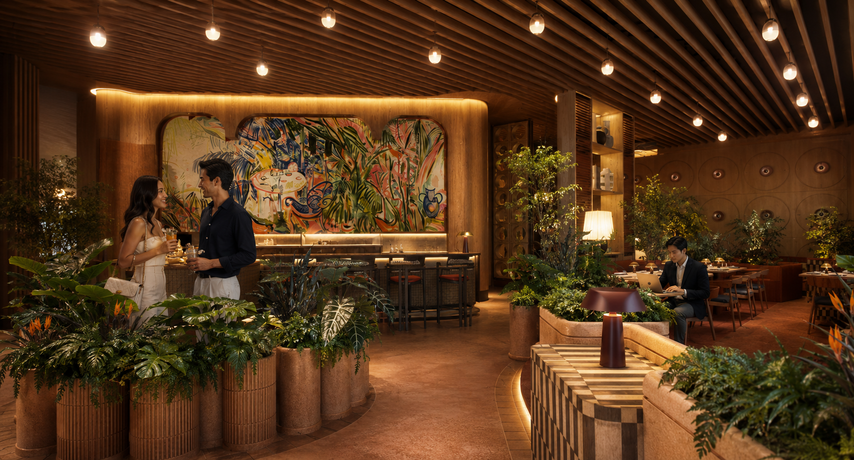
The answer was to bring different aspects of contemporary urban life together under one roof. Boutique serviced apartments at APT., hospitality-inspired workspaces at The Great Room, and a mix of dining, retail, and art are designed to complement one another, creating a place where people can stay, work, dine, and connect throughout the day.
“Each part of Stamford Place supports the others,” says Manchharam. Someone staying at APT. can work from The Great Room, meet for lunch downstairs, or explore the dining and retail concepts without leaving the building. At the same time, office workers, students, hotel guests, and visitors to the Civic District have their own reasons to enter.
The ambition is for these different groups to overlap naturally. Rather than feeling like a collection of separate businesses sharing an address, Stamford Place is intended to operate as one connected destination, with residents, members, diners and visitors giving the building an evolving sense of energy.
(Related: Restaurant Zén – where fine dining evolves)
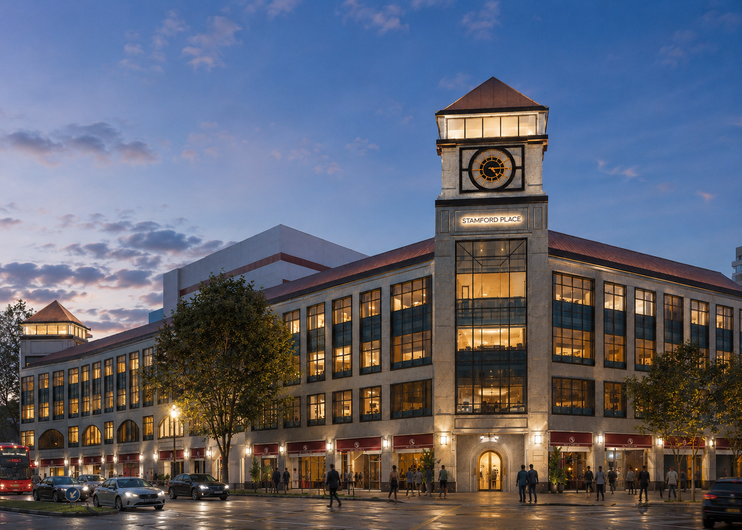
That thinking also shaped the approach to the building itself. Manchharam was conscious that while Stamford Court dates to 1996, its clock tower had become a recognisable part of the Civic District. Retaining it was important, but so was making the building feel more inviting and better connected to its surroundings.
The existing façade was refreshed rather than replaced, with a lighter finish chosen to sit more comfortably alongside the National Gallery. Meanwhile, the clock tower became a starting point for the design by Ministry of Design and Zarch Collaboratives, with its forms echoed through arches, curves and other details across the building.
The approach is deliberately neither preservation nor erasure. “We did not want to preserve the building exactly as it was, nor did we want to erase its history,” Manchharam explains. Instead, the familiar elements remain while the building is given a contemporary identity and, more importantly, a new purpose.

For Manchharam, that purpose is closely tied to relevance. When Elevate Capital Group acquired the property, conversations with neighbours revealed a demand for more casual, accessible, and convenient food options. That feedback helped shape the ground-floor mix, which ranges from full-service restaurants to casual, everyday concepts.
It reflects a broader belief that successful placemaking starts with understanding what a neighbourhood actually needs. In a city with no shortage of lifestyle destinations, Stamford Place is not intended to rely solely on novelty. Manchharam wants it to become useful to the people already around it, whether they are residents, office workers, or hotel guests.
“Ultimately, a place becomes relevant when people have genuine reasons to return and it becomes part of their daily lives,” he says.
(Related: What's in My Portfolio – Studio Ryecroft)
That philosophy extends beyond the physical transformation. Manchharam sees the role of a property owner as increasingly active, with the right operators, tenant mix, and programming becoming just as important as the architecture itself. As the boundaries between living and working continue to shift, he believes buildings need to be flexible enough to evolve alongside their users.
It is a perspective that sits at the heart of Elevate Capital Group’s approach to asset transformation, re-tenanting, and placemaking. Stamford Place is, in many ways, an opportunity to put that philosophy into practice.
Ultimately, Manchharam hopes the project becomes a recognised part of the Civic District, complementing the museums, schools, offices, and hotels around it while bringing more life to this particular corner of the neighbourhood.
There is also a larger ambition. He wants Stamford Place to demonstrate that an existing building, even one presenting its share of challenges, can be transformed into something both relevant and commercially viable.
For someone who once simply walked past the site on his way to school, that may be the most meaningful measure of the project. Not that the building has been made new, but that it has been given another reason to belong.





 Back