STEPHANIE TAN
Founder, Equatorial Bespoke Jewellery
What does “passion” and the “pursuit of excellence” mean to you, and how has your definition of it evolved throughout your career and personal journey?
Passion, for me, is being so absorbed in something that I keep thinking about it long after the working day ends.
My early experience was about learning through creating. I trained as a silversmith, studied gemstones and jewellery design, and ran an earlier brand centred on my own handcrafted pieces. Making jewellery by hand gave me a first-hand understanding of the knowledge, skill, patience, and problem solving behind every piece.
Today, at Equatorial Bespoke Jewellery, that passion extends to the people we create for. Understanding what someone hopes to express through their jewellery has become as important to me as understanding the gemstone itself.
My definition of excellence has grown alongside that. Beauty and fine finishing are essential, but I am also concerned with how each piece is constructed, its strength, and how comfortably it can be worn.
Grand Seiko’s pursuit of excellence is rooted in attention to detail, where even the smallest elements contribute to the whole. What are the details that you refuse to compromise on, and why are they important to achieving excellence?
I won’t compromise on the quality of our gemstones, the construction and finishing of our jewellery, the care we take to understand our clients, or the honesty of our advice.
In the jewellery itself, I pay attention to the relationship between beauty and structural integrity. A discreet support bar beneath a centre stone might seem like a small detail, but removing it can affect the security of the setting. When a client prefers a lighter profile, I work with our craftsmen to explore ways of achieving that look without weakening the construction.
That same attention to detail applies to understanding the person we are creating for. I want to know what has prompted the commission and what the piece will mean to them. A favourite colour, a memory they share, or the jewellery they reach for most often can help us understand their preferences and how a piece fits into their life.
Your industry typically requires a willingness to challenge convention and find better ways of doing things. How do you approach design and innovation in your own work, and how have they shaped your pursuit of excellence?
Sometimes the starting point is a client’s story. Other times, a gemstone suggests a direction. I like being receptive to both.
With innovation, I am interested in what a design can offer the person wearing it. Our convertible pieces, which can be worn as either a ring or a pendant, are a good example. Each form must look complete and feel comfortable to wear. The mechanism needs to be secure and straightforward to use, while remaining discreet within the design.
Achieving that involves multiple iterations with our craftsmen. We work through the proportions, how the components fit and move, and how someone will handle and wear the piece. An idea may look promising in a drawing, but there are further questions to resolve when translating it into something physical.
Grand Seiko’s approach to watchmaking is guided by pillars such as precision, craftsmanship, aesthetics, refinement, and innovation. Which of these resonates most strongly with you, and why?Craftsmanship resonates with me because it is where all these qualities come together. I see that both in a beautifully cut gemstone and in the jewellery created around it because beautiful gemstones and fine jewellery designs need precision to bring them to life, and an inventive mechanism needs careful refinement before it feels natural and practical to use.
Even before a gemstone reaches us, a great deal of craftsmanship has gone into its cutting. The cutter must assess the rough and consider the shape and proportions of the finished stone, how much weight can be retained, and the placement and angles of its facets. Those decisions call for technical understanding and a trained eye.
What resonates with me about Grand Seiko’s pillars is that they describe this same interconnectedness. Precision, beauty, and refinement contribute to craftsmanship together.
Looking at your own pursuit of excellence, what is one lesson or principle that you believe applies to anyone who is committed to mastering their craft?
Getting fully involved in all aspects of your work is the only way to understand your craft. Handling a gemstone, working through a design construction challenge, or understanding why a promising design needs to be revised teaches you things that just observing from the sidelines cannot.
I have built my knowledge through formal training, making jewellery by hand, and learning from specialists across the fine jewellery industry. I value the experience of the craftsmen I work with and make a point of understanding the reasoning behind their recommendations. That knowledge stays with me and informs the next piece.
Mastering a craft means becoming more discerning without becoming less curious. I want to keep questioning, learning, and improving.




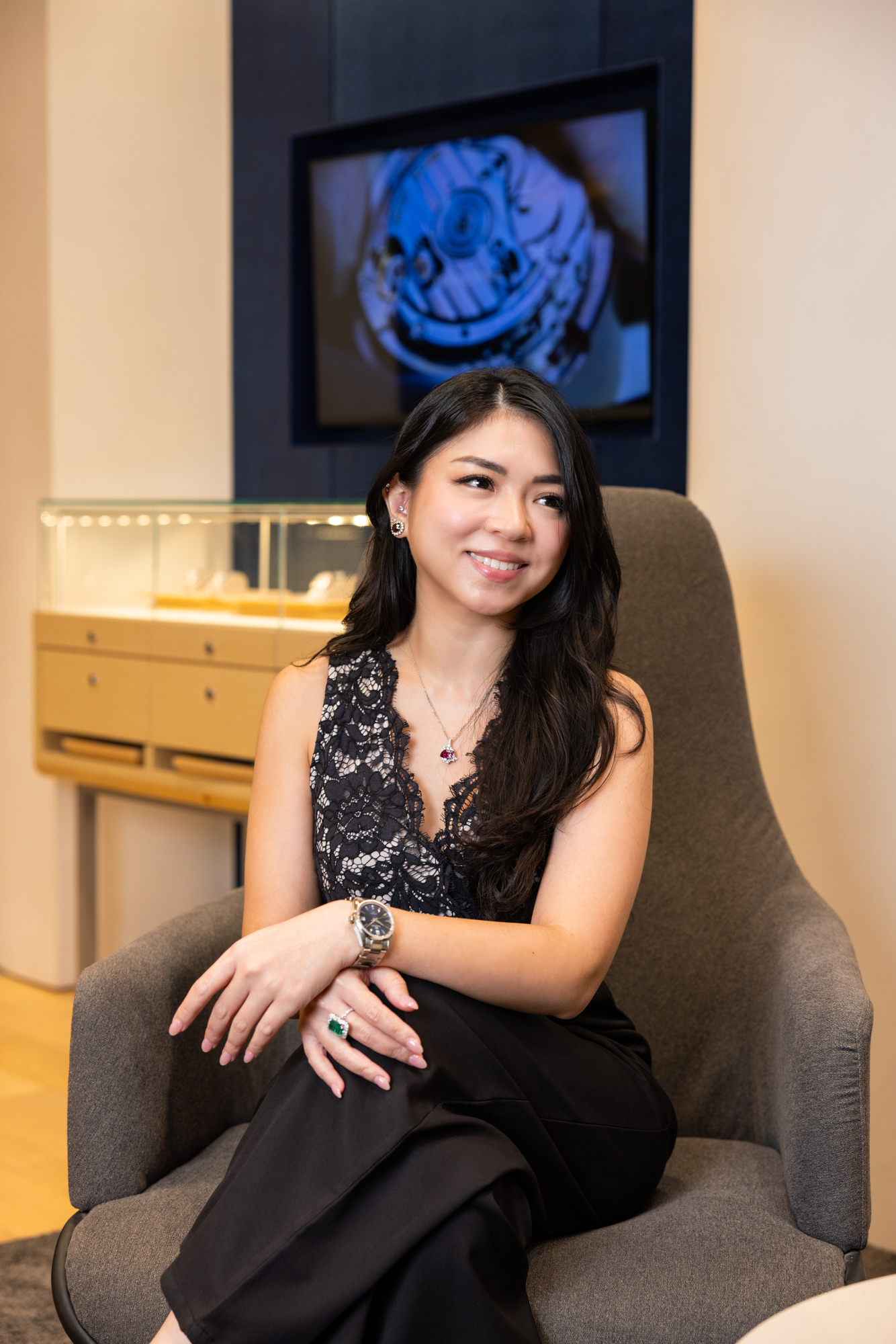

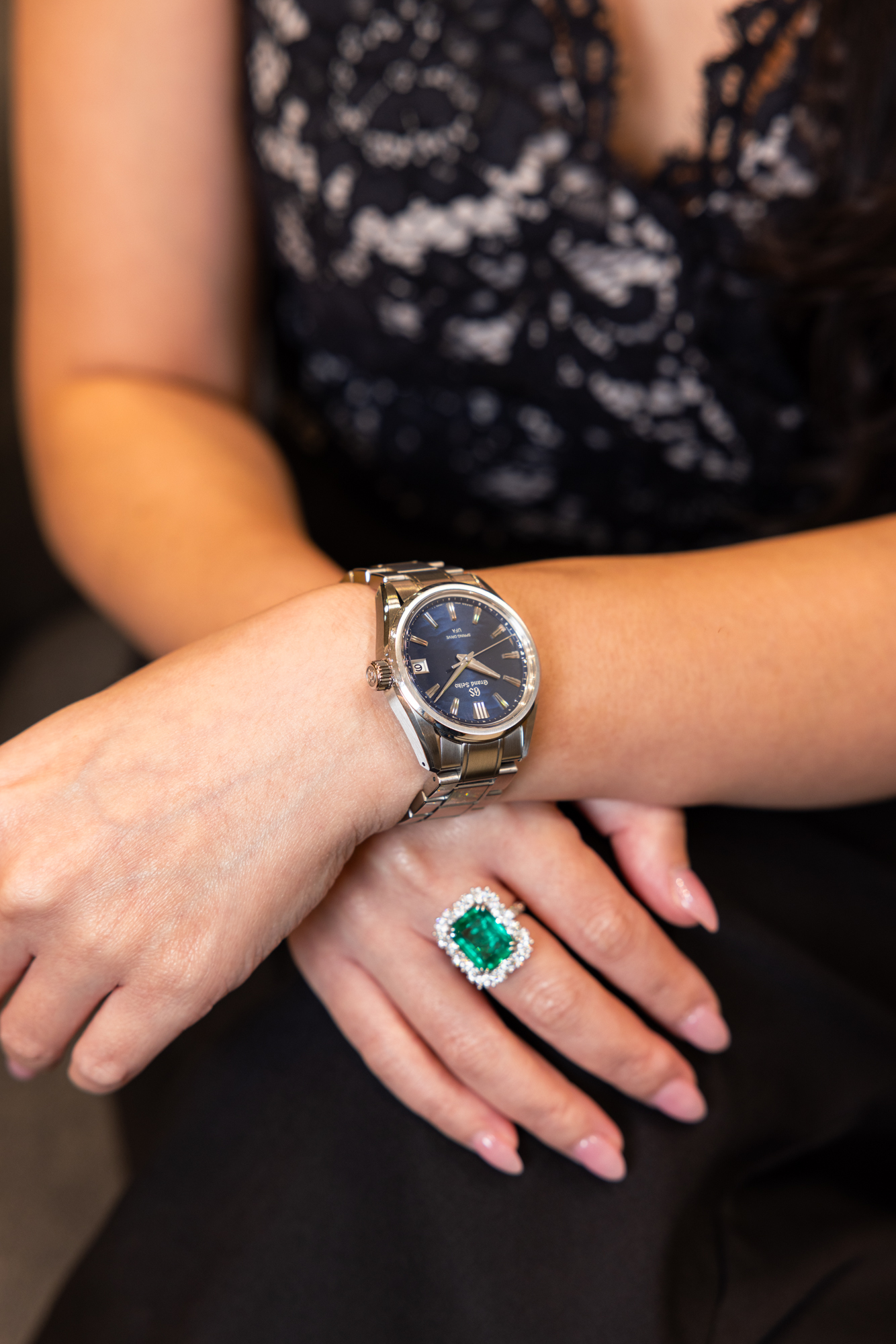 Stephanie is wearing the SLGB015 (Lake Suwa, U.F.A)



 Back
Back