Spring arrives in Switzerland without much ceremony. Snow retreating a little further up the mountains each day, hotels unlocking doors that stayed shut through winter. It is a country that does seasonal transitions without drama, and mine opened in Zürich, at an address that wasted no time reminding me exactly where I was.
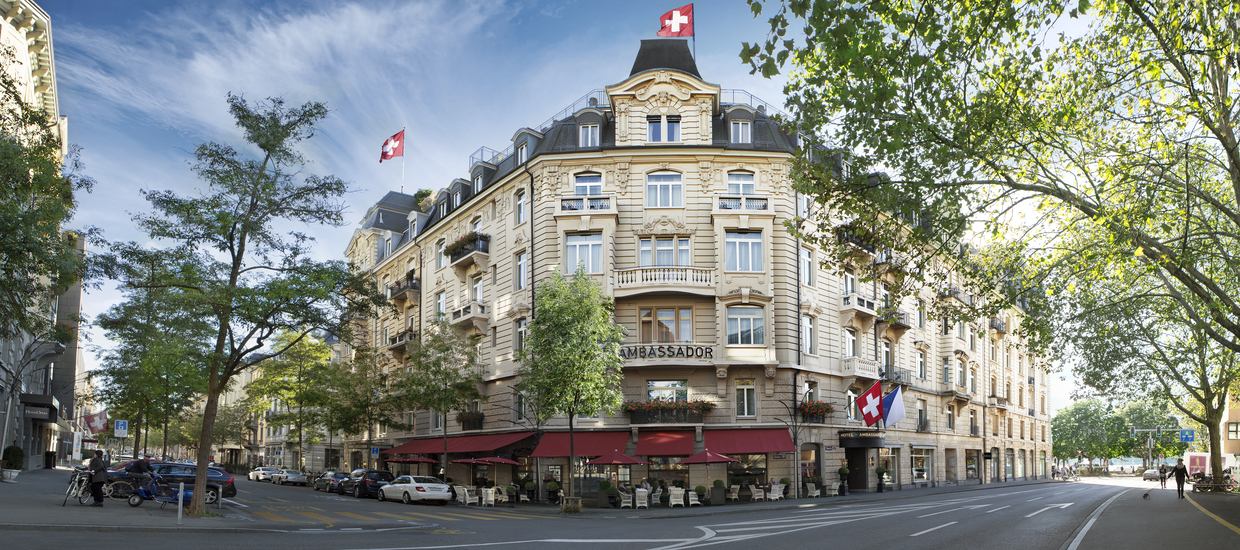 Façade of Ambassador Hotel
.jpg)
Ambassador Hotel sits opposite Zürich’s opera house in a building that spent its first decades as a parade of luxury shops – a neo-baroque address from 1898 that only later got around to taking guests. The five floors are each themed after a different historic trading partner from Zürich’s old silk years – Britain, France, Spain and the Americas, Asia, India – and down the corridor, small mosaic portraits mark the women who ran this building through its various incarnations. What the location buys you is a different Zürich than the one most visitors collect: Fewer private bankers, more people walking home from a Wednesday matinee still arguing about the soprano.
The Altstadt rewards an aimless hour more than a checklist – an grand sequoia outside the Wasserkirche that nobody can quite date, a marker at the Münsterhof where Churchill once called for a unified Europe, and Café Odeon still carrying the residue of the Dadaism art movement. Across the Limmat, the Kunsthaus is worth the crossing: Chipperfield’s extension more than doubled the museum’s footprint a few years back, but it’s still the Giacometti rooms in the original building that stop you mid-step.
A few minutes off Bahnhofstrasse, the Widder Bar is the city’s drinking institution by fact rather than reputation – nine medieval houses knitted into a single address, a spirits collection serious enough that staff need a rolling ladder to reach the upper shelves. Ask for something Swiss: Turicum small-batch dry gin distilled in the city itself, or Cantina alla Maggia’s venture into single malt whisky from Ticino, both tend to open the better conversations. Restaurant Lux earns its own dinner reservation – a glass-walled room with Lake Zürich and the mountains arranged behind it, a kitchen built around lake catch and quality seafood rather than the city’s usual roast veal routine. The dover sole, carved tableside, makes a clean argument when paired with a glass of Bianco del Ticino by Vinattieri Ticinesi – a locally produced Chardonnay-Sauvignon Blanc blend white wine, aged in oak.
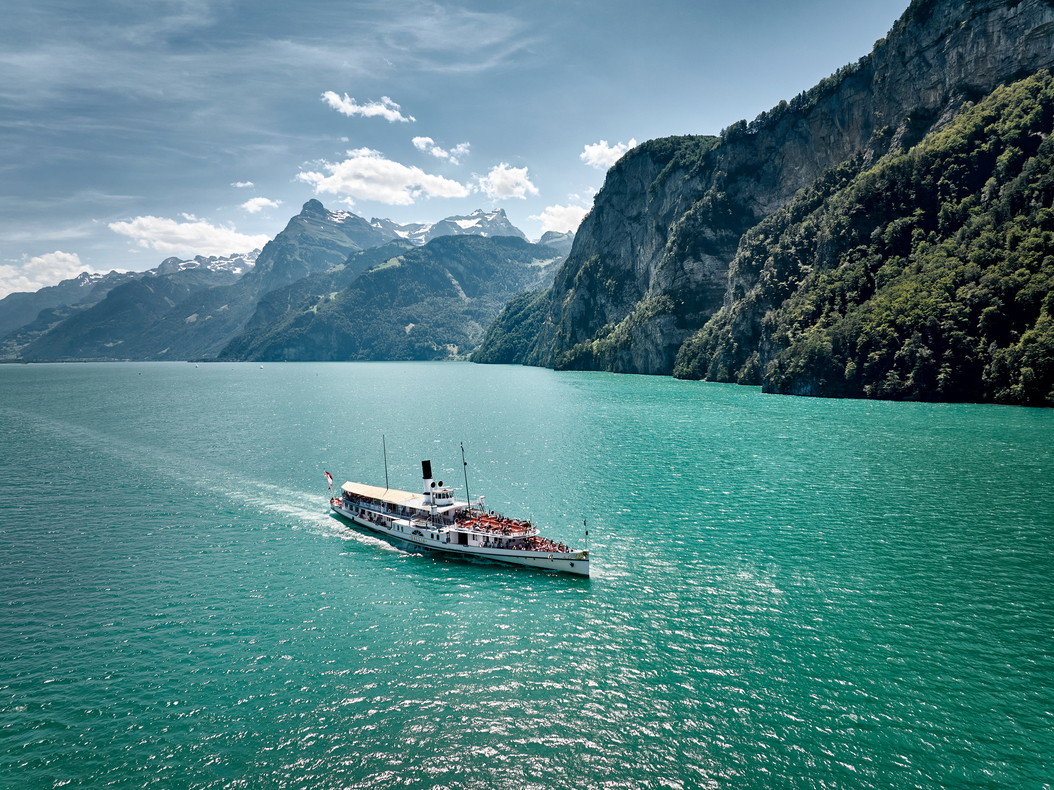 The Gallia on Lake Lucerne
Switzerland’s rail network is one of the few in the world that functions as a real alternative to driving – the InterCity from Zürich to Lucerne runs at under fifty minutes, connections between cantons arrive punctually, and the scenery between stations is no accident. We boarded The Gallia from Lucerne – a paddle steamer from 1913, original steam engine still running – and spent four hours on Lake Lucerne rather than in the city, where most travellers know the bridges and the lion well enough already.
A five-course lunch moved at the pace the lake dictated; the crew narrated the compelling parts, among them the exploits of Casimir Friedrich Knörr, who pioneered steam navigation on these waters, and the Rütli Meadow on the port side, where the Swiss Confederation swore itself into being in 1291. Mark Twain came through in the 1870s bracing for disappointment and wrote that the lake’s reputation had not been exaggerated – a sentence that reads almost reluctantly, which is exactly why I believed it more than most things written about this country since.
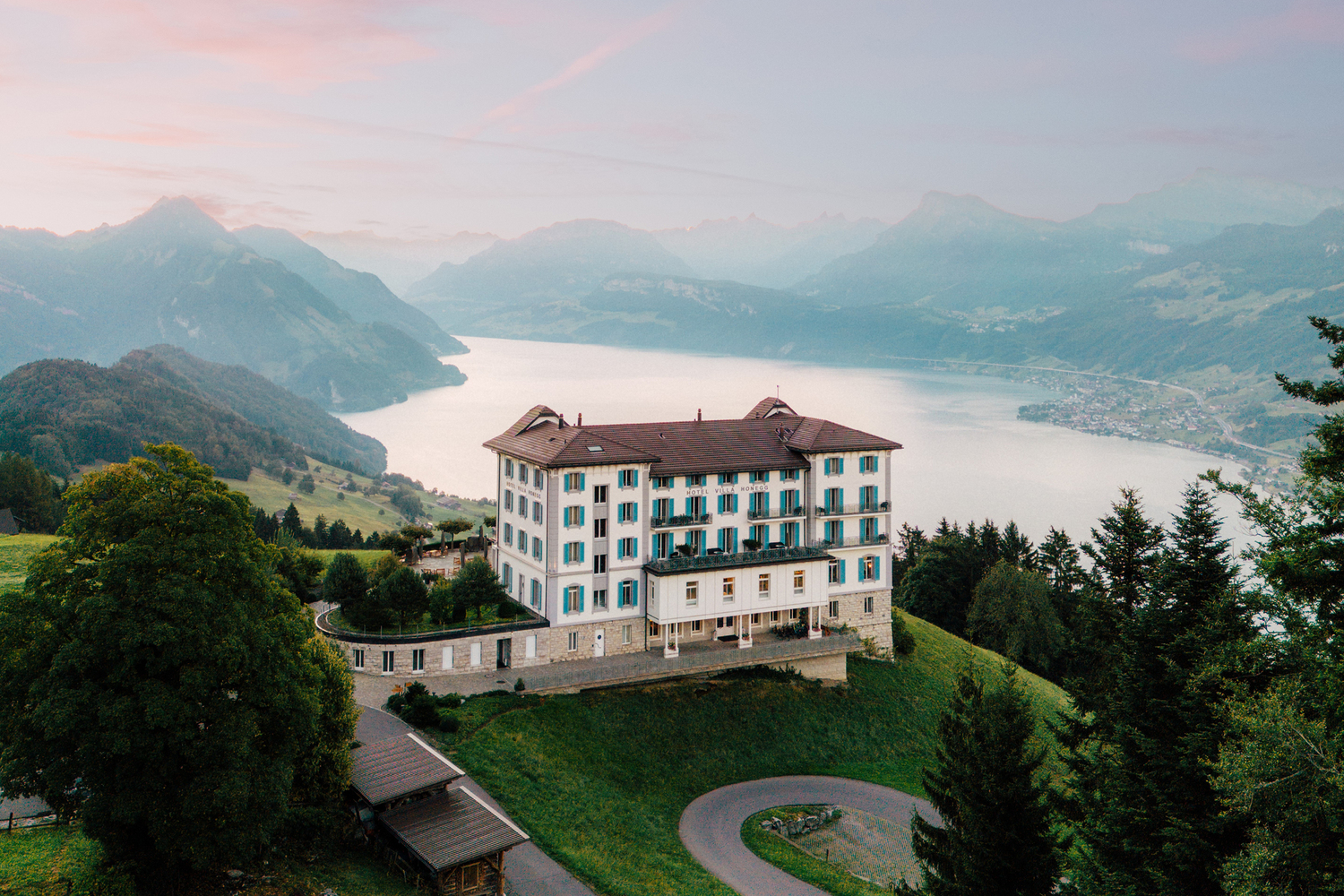 Hotel Villa Honegg
Four hours tore past like a tempest. I soon found myself in the meadows of Ennetbürgen – the lake drops away incrementally as the altitude builds – hoping to arrive at Hotel Villa Honegg before the sun sets. Sitting at 914 metres, this beautifully restored hotel is only reachable by a winding private road. Twenty-five rooms across the entire property means that whole afternoons pass without crossing paths with another guest; staff appear where needed and otherwise leave the building to its own silence.
The corner suites, with balconies wrapping two sides of the room, unveils an unobstructed 180-degree sweep from the lake to the highest ridge lines before the morning mist fully lifts. Interiors, furnished in dark wood, olive, and restrained gold, skews closer to a well-maintained private residence than luxury hotel.
The infinity pool at the cliff edge has been photographed into something close to a symbol by now, and not without reason – heated to 34 degrees, it sits where the mountain and the lake meet the sky, and on a weekday morning it will likely be entirely yours. That combination – a view that grand and no one else around – is not something that can be reliably replicated elsewhere at any price.
(Related: Switzerland's beauty and culture is best experienced in the fall)
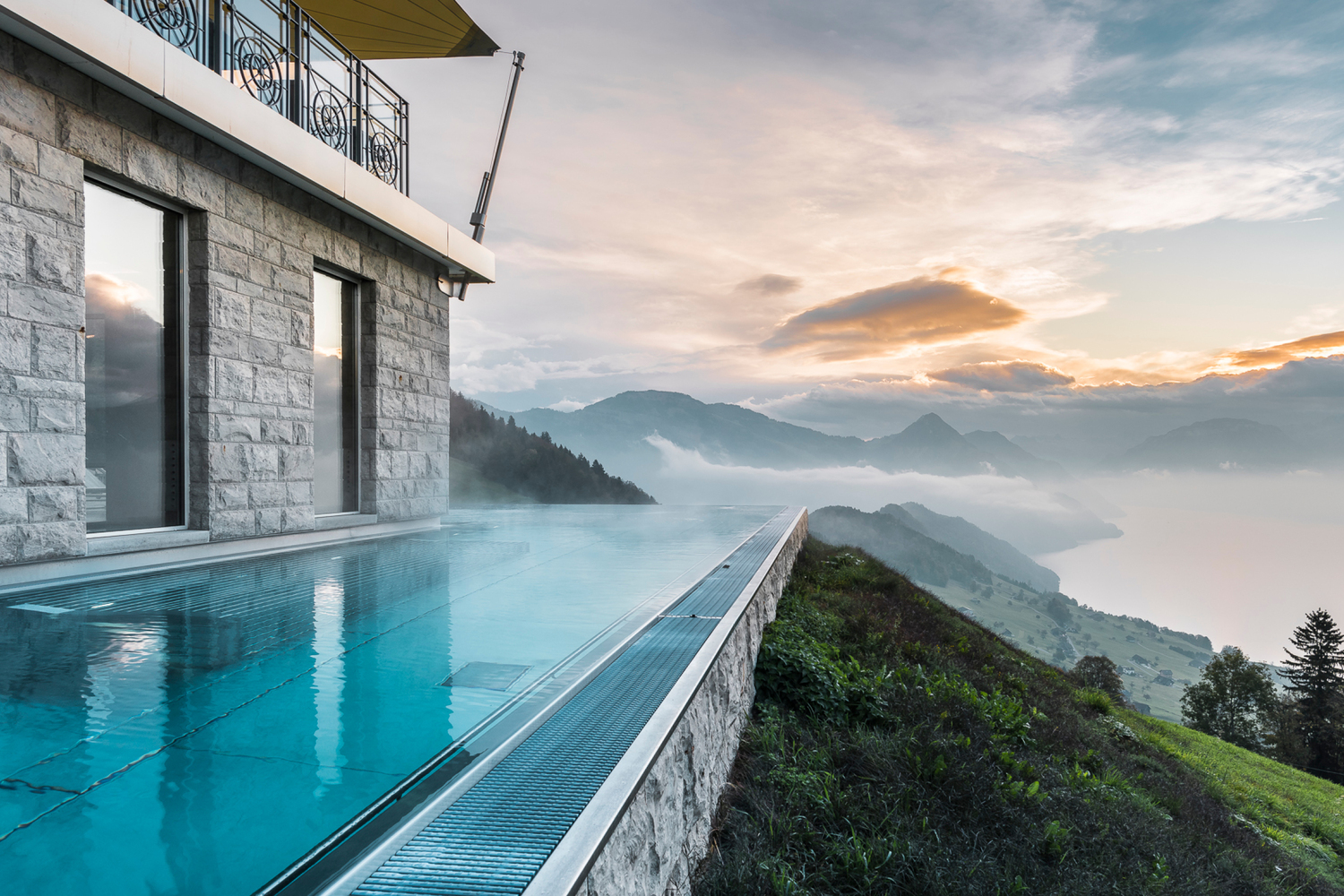 Cliff infinity pool at Hotel Villa Honegg
Dinner is built on provenance rather than performance. Illustrated cards arrive with each course – greens and herbs cut from the Honegg garden, quail from Rheintal breeders in Montlingen, meat from Holzen Metzgerei in Ennetbürgen – and the kitchen’s own-label Valais white, a hauntingly crisp Chardonnay-Amigne blend, runs through most of the meal without overstaying. The cheese course comes from producers near enough that the cattle bells carry from somewhere outside, while the honey is from bees kept on the grounds.
The walk to the Hammetschwand Lift often gets described as a stroll and that description is rather optimistic by local standards; the Felsenweg traces an exposed line along the cliff face for the better part of an hour before the tower comes into view. Pack proper footwear, take water, and treat it as the hike it is. Europe’s tallest outdoor elevator, a steel cabin ascending sheer rock, is the reward at the top, promising panoramic lake views laid out at 1,132 metres in every direction.
Spring in Switzerland is not a season that markets itself. The powder snow season is over, there are no bloom forecasts to track, no peak week to chase, and no summer festivals to anticipate. What there is, for the traveller who has already exhausted the obvious circuits, is a country operating at its least performed: Tables available, attractions unqueued, mountain hotels running at the scale they were designed for rather than the capacity the high seasons demand. It is, for a certain kind of traveller, the only time to go.





 Back