



Architects, you see, tend to get all the glory. They appear on magazine covers, they win awards for their work, and their work become the defining images of a city. Engineers, on the other hand, don’t often get to hog the limelight. They tend to work behind the scenes – making sure that those ambitious designs actually work.
Yet engineering is the bedrock of any development. How would a skyscraper stand without a solid foundation? How would a city keep running without infrastructure? We might admire a building or a city for its aesthetics, but it’s the less obvious details that influence how we experience it.
Take Marina Bay Sands, for example. A visitor might consider its unique silhouette an icon of Singapore, but making such a vast and varied structure work safely and comfortably required complex structural engineering.
Similarly for Jewel Changi Airport. Tourists flock in droves to snap photos of the Rain Vortex, but they remain oblivious to the acoustic challenges that builders faced preventing the thunderous noise from the world’s largest indoor waterfall from disturbing the peace.
PROFILE
Singapore Might Be A World-Class City, But Is It A Great Place to Live?
Photography by Vernon Wong
Art direction by Leyna Poh
Grooming by Nikki Fu using NARS
03 Nov 2026
From the buildings we inhabit to the streets we walk on, Arup’s TC Chew discusses the underrated details that make Singapore more liveable.

Ask anyone on the street to name an architect or architecture firm, and you might get responses like Moshe Safdie, SCDA, WOHA, or Zaha Hadid. Ask those same people to name an engineer or engineering firm, and you might get blank looks instead.
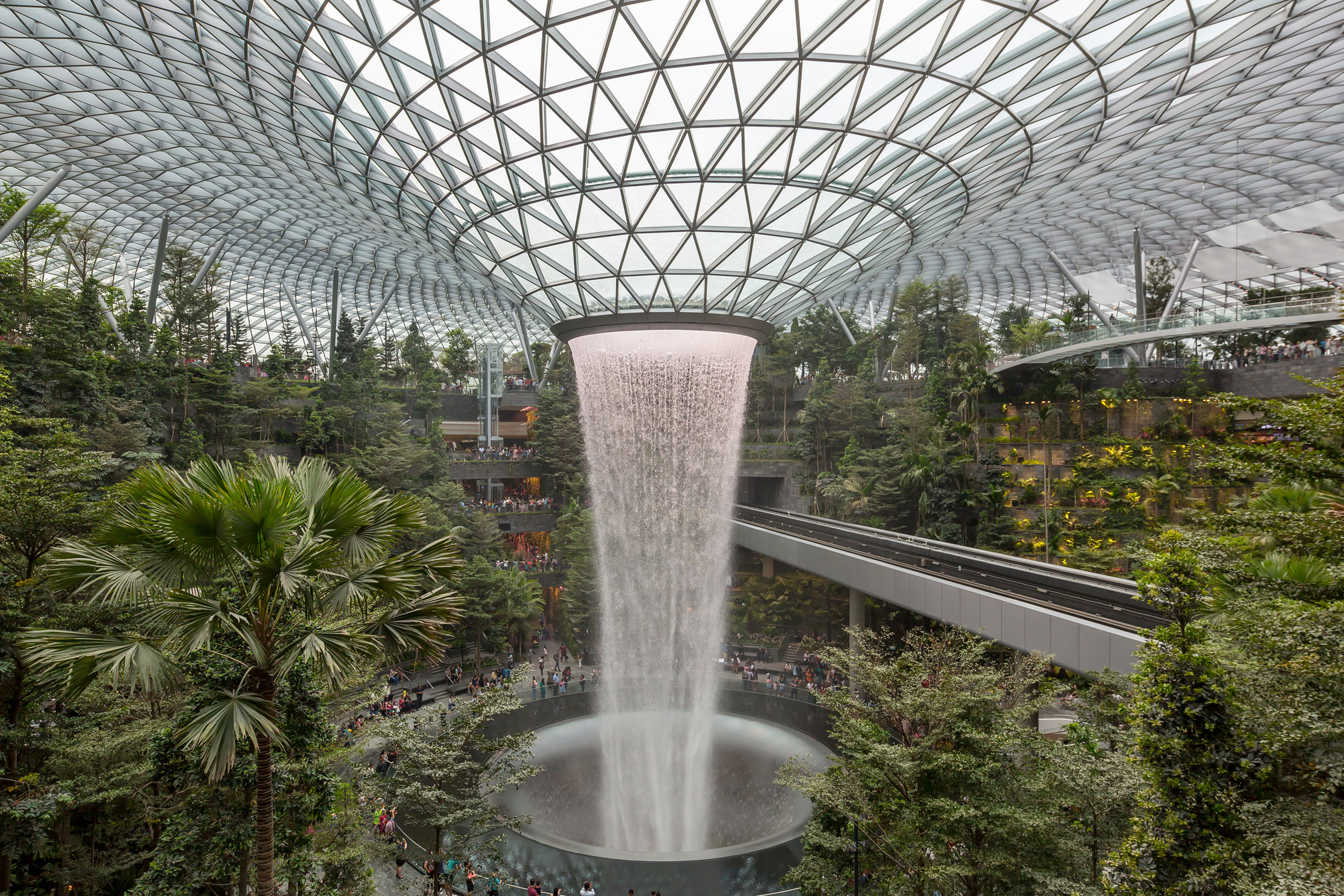 The roof of Jewel Changi demonstrating the building's facade. At its widest point the roof spans more than 200m, and weighs over 3,500 tonnes.
Photo courtesy of Arup
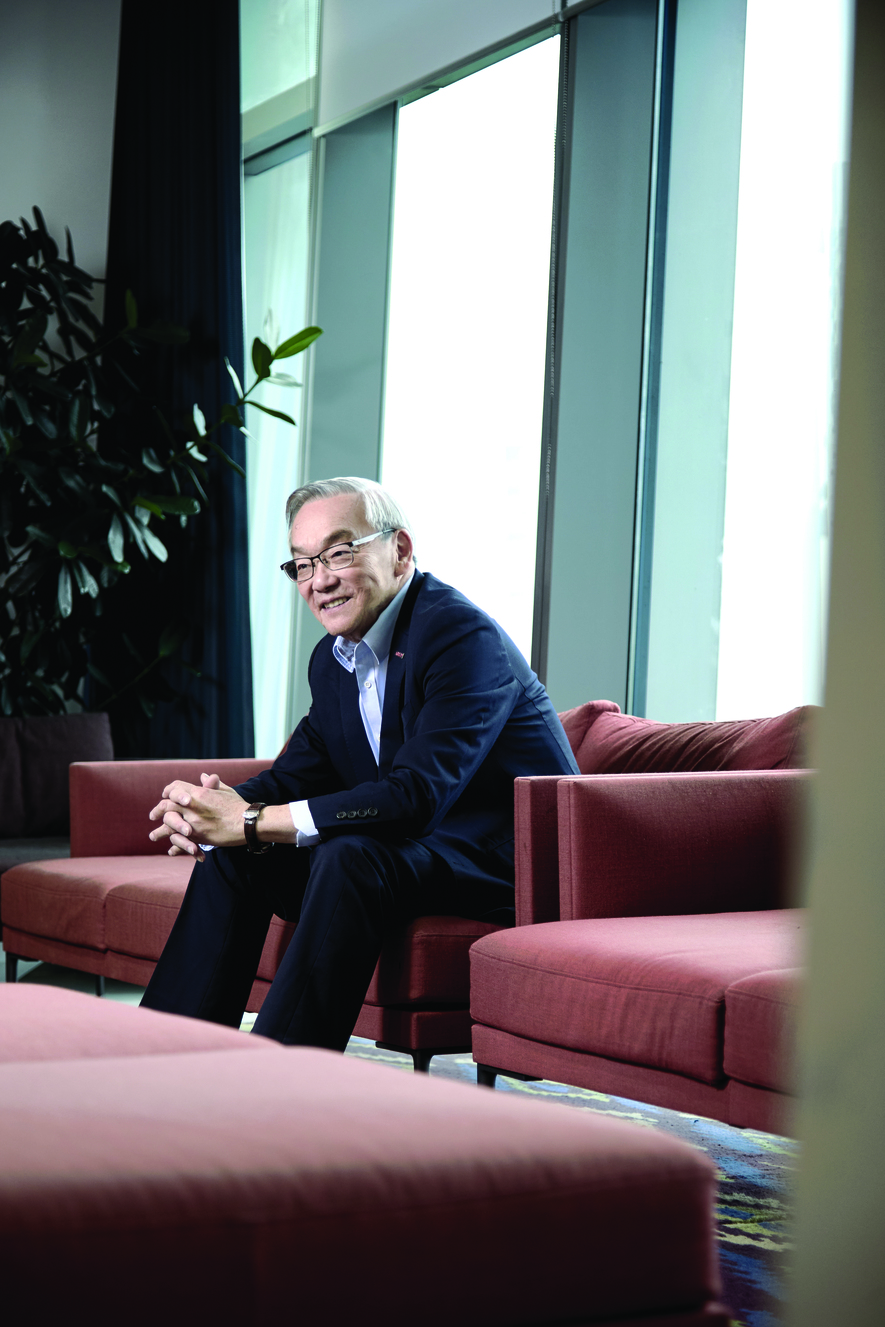
These are the kinds of issues that occupy Arup’s TC Chew. He’s the Asia-Pacific managing director of the global engineering and design firm. With a background in major infrastructure and rail projects, he leads a 6,400-strong team spread across more than 25 offices in the region.
For Chew, the measure of a successful development lies beyond its visual impact or aesthetic value.
“I would measure success through three lenses,” he tells PORTFOLIO. “First, does the development perform well? That includes things like accessibility, sustainability, resilience, operational efficiency, and adaptability.
“Second, does it enhance the everyday experience of the people who use it? The true test is often found in the small moments. Does it create a comfortable environment? Does it encourage interaction, support wellbeing and make people's daily journeys easier?
“Third, does it contribute positively to the wider city?”
- THE DEVIL IS IN THE DETAILS
- BEYOND A GREEN CITY
- DESIGNING FOR A SUPER-AGED SOCIETY
- THE CITY OF 2036
THE DEVIL IS IN THE DETAILS
In the case of Jewel Changi Airport, Arup provided facade engineering and acoustic consultancy for the project. This included studying the Rain Vortex’s sound levels and modelling how noise from various activities would impact visitors.
“In a development designed to be visually spectacular and host a wide range of activities, acoustics are not simply a technical consideration; they influence comfort, communication and safety,” says Chew.
Indeed, comfort levels and ease of movement play hugely important roles in shaping the user experience. Take Arup’s work on Singapore’s Thomson-East Coast Line (TEL) as an example. At Bayshore Station, refining the design made it easier for passengers to change between tracks.

But a convenient train journey is only part of the big picture. “A fast train alone does not make for a good commute if the walk to the station is exposed, indirect, or difficult for someone with limited mobility,” Chew highlights.
Thus far, Singapore has gotten many of the fundamentals of urban living right, Chew argues. But he also believes that there is room for improvement. “Singapore is renowned for its urban efficiency and well-loved public spaces. The opportunity now is to further elevate everyday vibrancy, shaping streets and plazas that invite people to linger even longer,” he offers.
To do so – in a climate that is steadily warming – city planners need to treat shade, ventilation, safe crossings, and places to pause as essential infrastructure.
(Related: How Stamford Place is getting a new lease on life)
- THE DEVIL IS IN THE DETAILS
- BEYOND A GREEN CITY
- DESIGNING FOR A SUPER-AGED SOCIETY
- THE CITY OF 2036
BEYOND A GREEN CITY
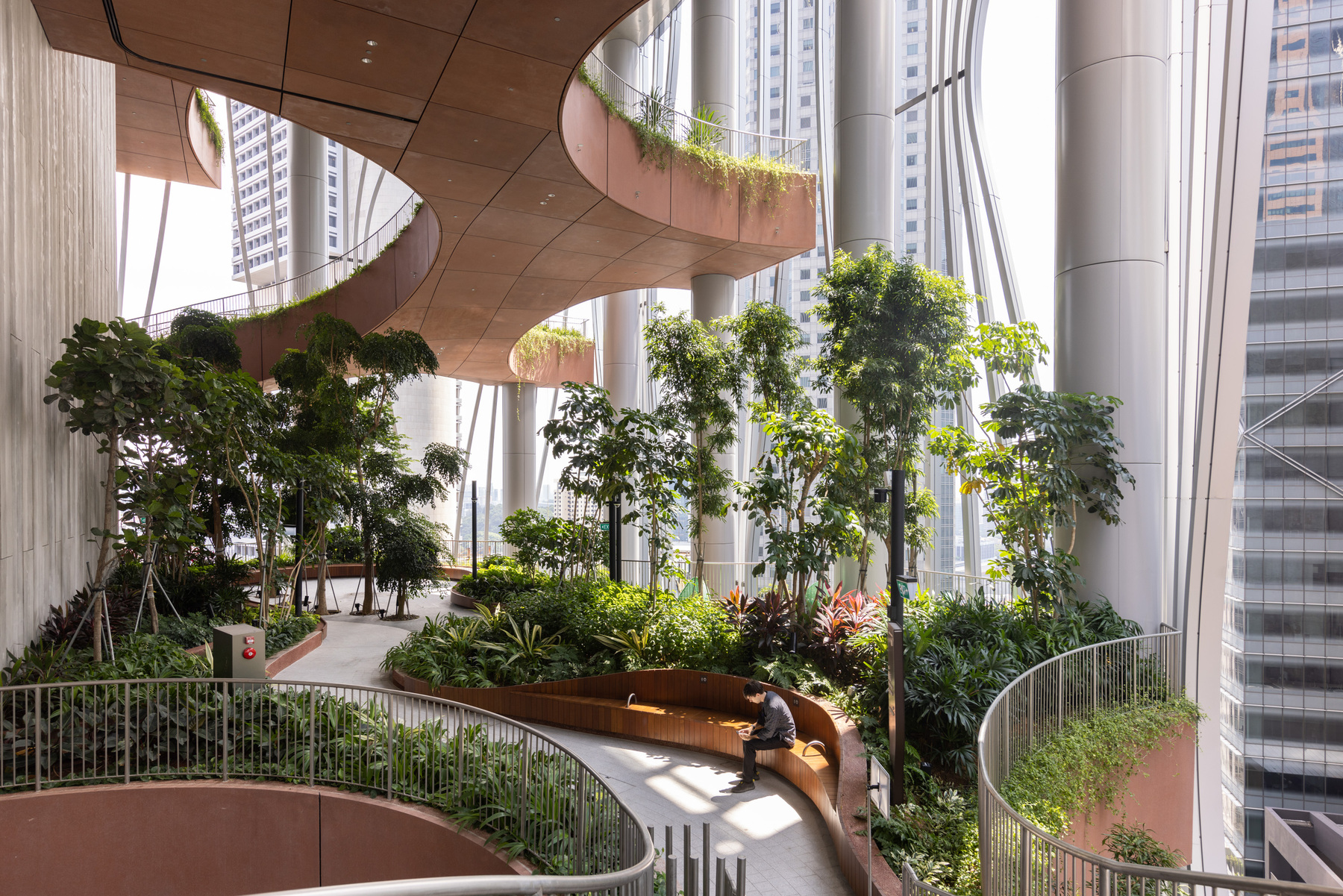 Arup used biophilic design at CapitaSpring to create spaces which are naturally cooler and less reliant on 24-7 air-conditioning.
Photo by Finbarr Fallon
Singapore’s reputation as a green city is well deserved, but planting more trees isn’t a one-stop solution to making outdoor spaces more comfortable.
“The objective should not be to make every outdoor space look greener. It should be to make more of the city genuinely usable outdoors, for more people, across more of the day,” argues Chew.
Take CapitaSpring, a biophilic, Grade A office building in Singapore’s CBD that incorporates more than 80,000 plants and over 90,000 square feet of landscaped area.
Here, Arup used computational fluid dynamics and thermal modelling to assess airflow and thermal comfort in spaces including the Green Oasis (a four-storey vertical garden) and City Room (the partly-sheltered ground floor plaza).
The point, says Chew, is not simply how much greenery can be squeezed into a development, but how its design supports plant growth, daylight, and people's comfort.
(Related: Why TEMUS CEO Sng Ren Yeong believes AI transformation starts with people)
- THE DEVIL IS IN THE DETAILS
- BEYOND A GREEN CITY
- DESIGNING FOR A SUPER-AGED SOCIETY
- THE CITY OF 2036
DESIGNING FOR A SUPER-AGED SOCIETY
With Singapore officially classified as a super-aged society in 2026 – meaning one-fifth of its population is 65 or older – designing for the future cannot simply be about building more healthcare facilities.
The city must be planned and designed in a way that helps older residents remain independent, active, and socially connected.
“We should act now because buildings, streets, and transport systems last for decades,” urges Chew.
That means thinking beyond ramps and lifts to consider whether daily necessities are within reach, whether public spaces invite people to gather, and whether transport systems accommodate different levels of mobility.
Arup’s upcoming integrated development at Jalan Damai in Bedok Reservoir brings together essential facilities such as a polyclinic, kidney dialysis centre, nursing home, and park. Projects like this demonstrate how eldercare services can be effectively woven into the fabric of everyday neighbourhood life, rather than treated as separate destinations.
- THE DEVIL IS IN THE DETAILS
- BEYOND A GREEN CITY
- DESIGNING FOR A SUPER-AGED SOCIETY
- THE CITY OF 2036
THE CITY OF 2036
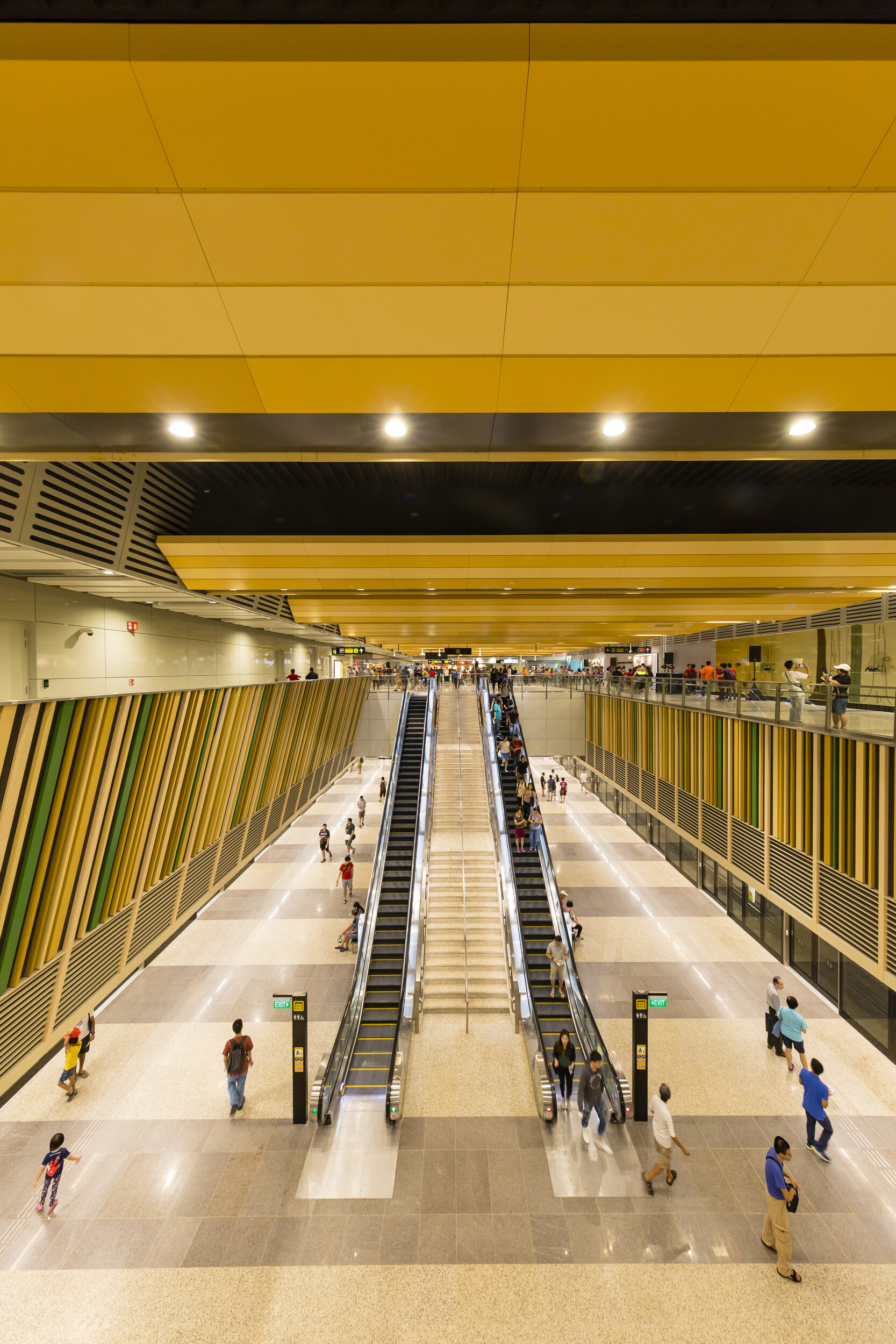 A station at Singapore’s Thomson-East Coast MRT line.
Photo courtesy of Franklin Kwan, Arup
Sometimes, engineering a liveable city involves certain trade-offs. For example, housing and infrastructure must compete for land with green spaces. In a recent example, plans to clear part of Maju Forest to make way for public housing met with a rare public backlash.
Chew believes economic growth, housing, and infrastructure remain important, but warns against losing sight of their ultimate purpose.
“If, in pursuing those objectives, we create hotter, less healthy, less connected, and less loveable cities, then we have lost sight of the purpose of urban development.”
In a decade’s time, he hopes Singapore will be better equipped for a hotter, older, and more resource-constrained world, with comfortable public spaces, neighbourhoods where daily needs are close at hand, and infrastructure that uses energy and materials intelligently.
In the end, a world-class city is not simply one that looks impressive from a distance. It is one that works beautifully up close, in the everyday moments that make up a life well lived.



 Back