There is a moment when the way one thinks about the future begins to change. For César Concepción, Chief Commercial Officer for Asia-Pacific, Middle East, and Africa at Novartis, that moment came not in a boardroom, but in a doctor’s office.
He was young, outwardly healthy, and by most measures, doing everything right. Yet the numbers told a different story. His cholesterol levels were dangerously high. Years later, another discovery would follow – an elevated level of lipoprotein(a), or Lp(a), a lesser-known but significant genetic risk factor for cardiovascular disease.
For many, such findings might register as a warning. For Concepción, they became something else entirely: A shift in mindset.
“The biggest change we need to make is recognising that health, much like wealth, compounds over time,” he says. “We are very intentional about our financial goals. But when it comes to health, many of us don’t act until we’ve had a scare. By then, it can be much harder to change the outcome.”
It is a perspective shaped not just by data, but by personal history. Cardiovascular disease had long cast a shadow over his family. His father passed away when he was just nine and a half. Later, two brothers and a sister would each suffer fatal heart attacks in their sixties. The pattern was difficult to ignore.
“That was a very scary thing to witness. “Watching them all pass, and each from their first heart attack,” he reflects.
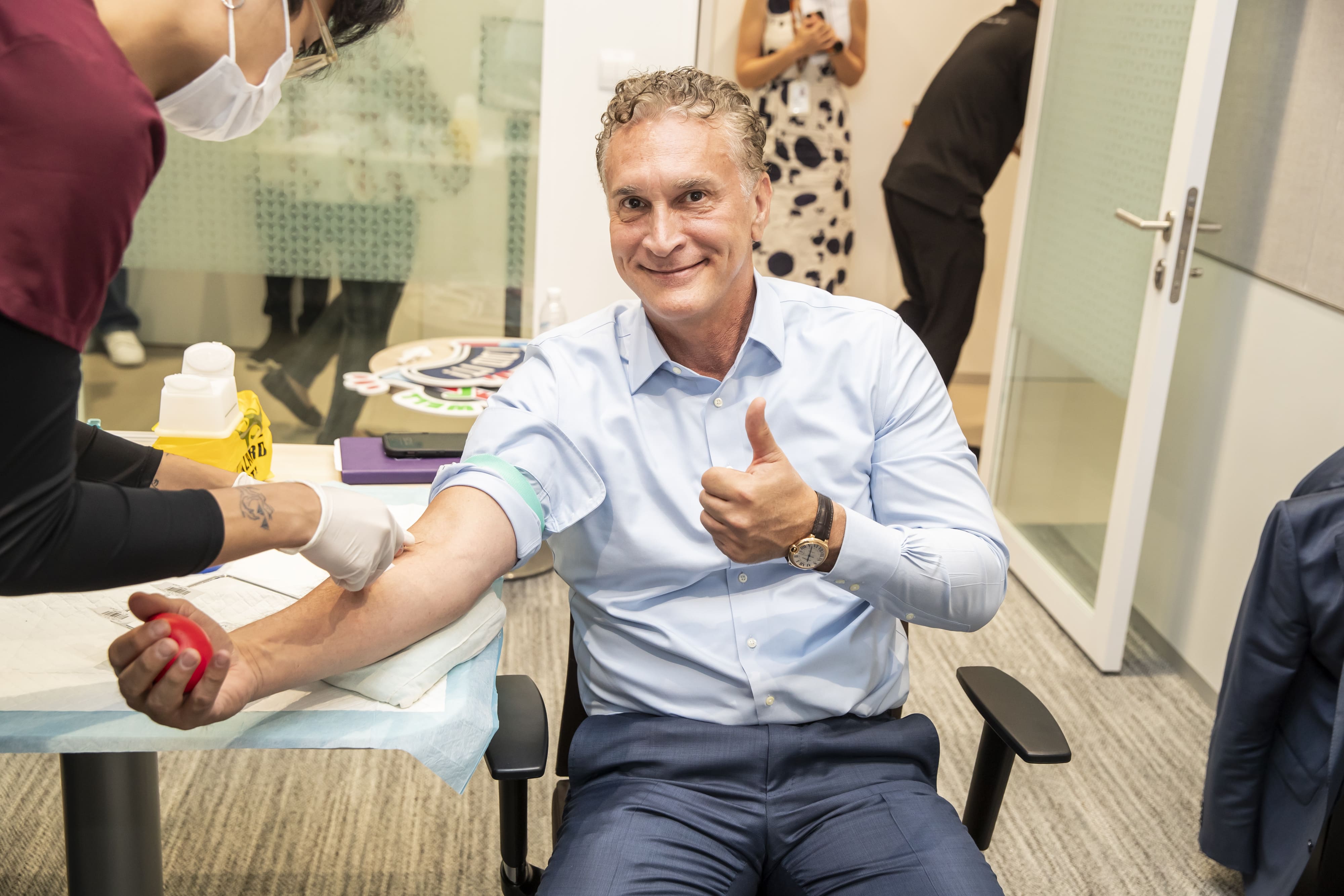 César Concepción
In that context, his own diagnosis was less a surprise than a confirmation. But it also became a catalyst. While still in his twenties, he made the unusual decision to begin treatment early, insisting on statins at a time when such intervention was uncommon for someone his age.
“I didn’t want to take any chances because I had seen the results in front of me,” he says.
What followed was not a single decision, but a sustained approach. Regular check-ups. An active lifestyle. A willingness to seek information and question assumptions. Over time, these choices began to take on a familiar structure – not unlike the way one might approach financial planning.
“You don’t invest in a retirement plan expecting immediate returns,” he says. “You do it because you understand the long-term impact of starting early and being consistent. Health works the same way.”
The analogy is a compelling one, particularly in a world where wealth accumulation is often prioritised with precision and discipline. Yet when it comes to health, that same level of intentionality is rarely applied. The result is a disconnect – between what people value in theory, and how they act in practice.
Part of the challenge lies in the nature of cardiovascular disease itself. Often described as a “silent threat”, it rarely announces itself until it is too late. Many people feel perfectly fine, even as risk factors accumulate quietly over time.
“Without routine screening, people might not even realise they are at risk,” Concepción says. “The lack of symptoms is often mistaken for the absence of risk.”
(Related: Why Acker is betting big on Singapore's growing fine wine market)
Even within the healthcare community, awareness is not always complete. Concepción recalls how little information was available when he first learned about Lp(a), despite his own background in biology and years of experience in the industry.
“I searched everywhere and found very little,” he says. “That made me realise how important it is to educate yourself and understand your risks, so you can be an active participant in managing them.”
Today, that message forms a central part of his advocacy. If there is a single principle that underpins his approach, it is this: Awareness precedes action. Without it, even the most preventable conditions remain undetected.
The implications are significant. With early detection and appropriate care, it is estimated that up to 80 per cent of heart attacks, strokes, and premature deaths related to cardiovascular disease can be prevented. It is a statistic that underscores the value of acting early – but also highlights how often that opportunity is missed.
“Knowing your numbers – your cholesterol, your blood pressure, your genetic risk markers – can quite literally give you a better chance of living longer and healthier,” he says.
His own motivations, however, extend beyond statistics. Today, as a father and grandfather, the calculus has become more personal.
“I never want my children or grandchild to grow up without a father or grandfather. That is why I take such a purposeful approach to my health,” he says.
.png)
“You don’t invest in a retirement plan expecting immediate returns. You do it because you understand the long-term impact of starting early and being consistent. Health works the same way.”
That sense of purpose is reflected not only in his personal habits, but in the way he leads. Across his role at Novartis, Concepción has been closely involved in efforts to shift the conversation around cardiovascular disease – from treatment to prevention, from reaction to anticipation.
At the same time, his international career has offered a broader perspective on how health is understood across cultures. In Puerto Rico, he speaks of a deeply ingrained optimism. In Spain, he adopted the practice of daytime rest, recognising its cognitive and physical benefits. Elsewhere, he has observed how daily movement and community care can shape long-term wellbeing.
“Health is approached very differently depending on where you are,” he says. “But there is something to learn from each of these perspectives.”
On a personal level, his own routine remains grounded in consistency rather than intensity: Regular exercise, daily habits, the discipline of sleep. And just as importantly, a sense of purpose beyond work.
“Health isn’t just physical,” he notes. “Passion and fulfilment matter as well.”
For Concepción, that takes the form of a foundation established in honour of his father, preserving his legacy as a musician and cultural figure. It is a reminder that wellbeing is not only about longevity, but about how that time is experienced and shared.
For high-performing individuals, particularly those accustomed to measuring success in financial terms, the message is both simple and easy to overlook. “As leaders, we are not recognised for the hours we work, but for the impact of our decisions,” he says. “To do that well, we need the energy and clarity that comes from taking care of ourselves.”
In that sense, health is not a competing priority. It is a foundational one. An investment that enables all others. “Looking after your wellbeing is not a distraction from success,” he adds. “It is the very thing that makes success possible and sustainable.”








 Back
Back