Few watches can claim to have shaped history quite like the OMEGA Speedmaster. Revered by collectors and everyday enthusiasts alike, it is one of those rare timepieces whose reputation extends far beyond the world of horology. While its connection to space exploration is well documented, the Speedmaster's story began much closer to Earth.
Introduced in 1957 as part of OMEGA's Professional collection alongside the Seamaster and Railmaster, the Speedmaster was originally conceived as a precision instrument for engineers, scientists, and racing drivers. It broke new ground by becoming the first chronograph to feature its tachymeter scale on the bezel rather than the dial, improving legibility while giving the watch a bold, purposeful aesthetic that would become instantly recognisable.
Every detail reflected its functional intent. A matte black dial offered exceptional contrast, broad arrow hands filled with luminous material ensured readability, while the robust Hesalite crystal was chosen for its ability to resist shattering under impact. Combined with a water-resistant case, the Speedmaster embodied the practical engineering that defined OMEGA during an era of rapid technological progress.
What began as a professional tool would soon find itself serving a far greater purpose. In October 1962, astronaut Wally Schirra wore his personal Speedmaster aboard the Mercury-Atlas 8 mission, making it the first OMEGA watch to travel into space. The watch had not been officially issued by NASA; Schirra simply trusted it enough to bring it along. That single decision would mark the beginning of one of the most remarkable partnerships in watchmaking history.
A few years later, NASA began evaluating chronographs for use during its manned space missions. The testing programme was famously unforgiving. Watches were exposed to punishing extremes, including searing heat, freezing temperatures, violent thermal shocks, vacuum conditions, high humidity, pure oxygen environments, severe vibration, acceleration, decompression, and impacts reaching 40 times the force of gravity.
Only one watch successfully completed every test.
(Related: Timing every moment with OMEGA)
In 1965, the OMEGA Speedmaster became officially flight-qualified by NASA for all manned space missions, a distinction it continues to hold today. It was not a victory built on marketing, but one earned through uncompromising performance under conditions few mechanical watches have ever faced.
That achievement paved the way for the moment that would forever cement the Speedmaster's place in history.
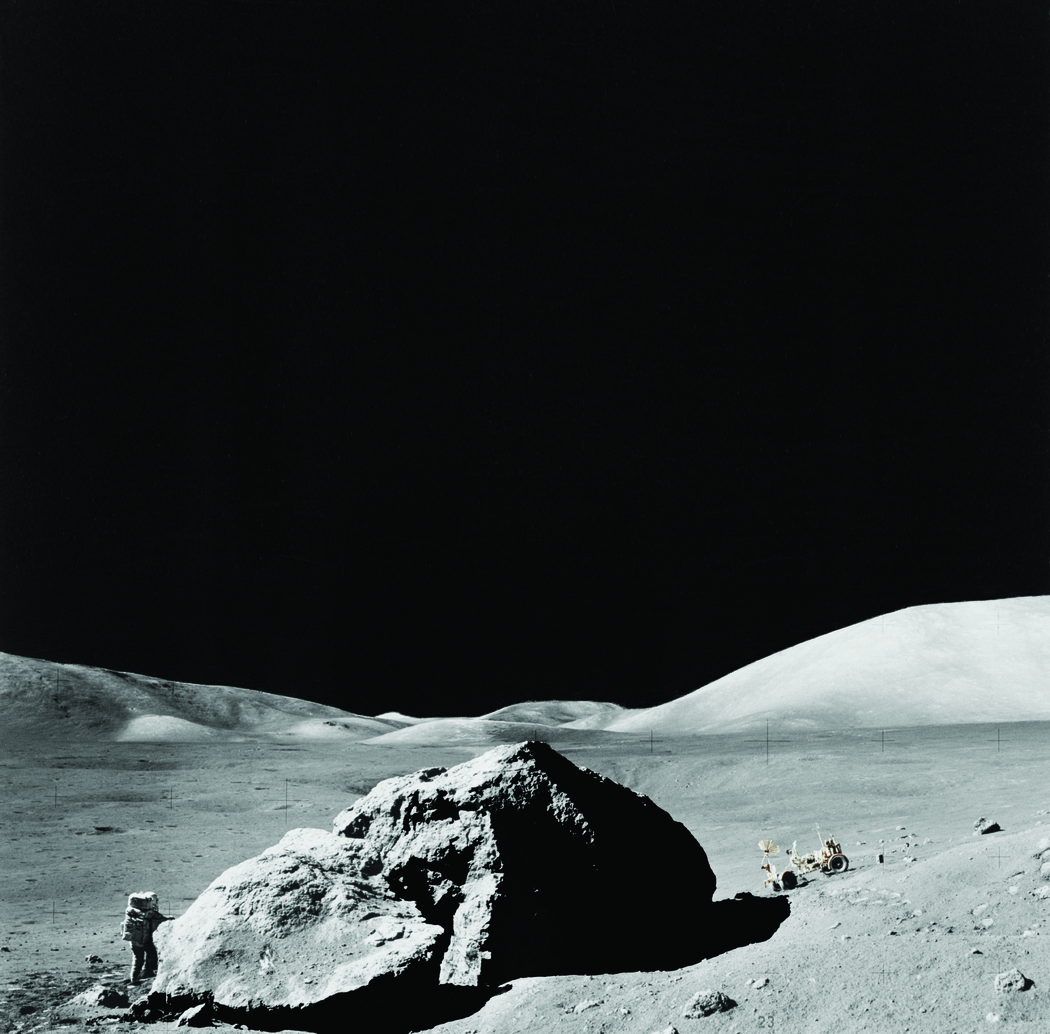
On 21 July 1969, Buzz Aldrin stepped onto the lunar surface wearing his Speedmaster, making it the first watch worn on the moon. Neil Armstrong had left his own Speedmaster inside the Lunar Module as a backup after its onboard timer malfunctioned, a reminder that during humanity's greatest technological achievement, a mechanical wristwatch remained an essential instrument.
The Speedmaster's contribution to space exploration did not end there. During the ill-fated Apollo 13 mission in 1970, the crew famously relied on their Speedmaster chronographs to time a critical 14-second engine burn that corrected the spacecraft's trajectory and enabled their safe return to Earth. In recognition of its role in the mission, NASA awarded OMEGA the prestigious Silver Snoopy Award, its highest honour for outstanding contributions to flight safety.
Throughout the Apollo programme, the Speedmaster accompanied astronauts on every crewed lunar landing, from Apollo 11 through Apollo 17. It also played a symbolic role during the historic Apollo-Soyuz Test Project in 1975, when American and Soviet astronauts met in orbit during the first joint international space mission, signalling a new era of cooperation in space exploration.
Perhaps what makes the Speedmaster so enduring is that it has never relied solely on its extraordinary past. While its lunar legacy continues to capture imaginations, the collection has evolved alongside advances in watchmaking without losing the characteristics that made it iconic in the first place.
The latest generation of Speedmaster Moonwatch models combines the timeless proportions and instantly recognisable design enthusiasts have cherished for decades with modern Master Chronometer-certified movements offering exceptional precision, anti-magnetic performance and reliability. It is an evolution that respects heritage while embracing contemporary expectations.
This year, OMEGA celebrates that remarkable journey by highlighting five references that showcase the breadth of the Speedmaster collection. Together, they represent nearly seven decades of technical innovation, thoughtful design and cultural significance.
(Related: OMEGA meets TGL)
In a time where the word "icon" is often thrown around loosely, the Speedmaster remains one of the few watches that truly earns the distinction. Its story stretches from racetracks to launch pads, from laboratory testing to the surface of the moon. More importantly, it continues to remind us that great design is never defined by a single moment in history, but by its ability to endure long after history has been made.
For more information, click here














 Back
Back