This special feature brings together three voices who are pushing past conventional boundaries in their own way. From reimagining what a lifestyle brand can represent, to redefining holistic health, and modernising a century-old family business for a global future, Nelson Yap, Dean Ahmad, and Alvin Choo share how going beyond limits is less about radical reinvention, and more about evolving with intention and clarity.
As a fifth-generation custodian of Kwong Cheong Thye, Alvin Choo stands at the intersection of heritage and progress. Tasked with safeguarding a brand that has shaped Singapore’s culinary scene for over a century, he is also responsible for ensuring its relevance in an increasingly global, sustainability-driven market. Through investments in automation, carbon accounting, and a new production facility, Choo is modernising traditional fermentation without compromising authenticity, proving that even the most time-honoured processes can move beyond limits with the right balance of respect and innovation.
Kwong Cheong Thye (KCT) has been part of Singapore’s culinary landscape for over a century. As a fifth-generation custodian of the brand, how do you balance honouring the company’s heritage while pushing the brand into its next chapter?
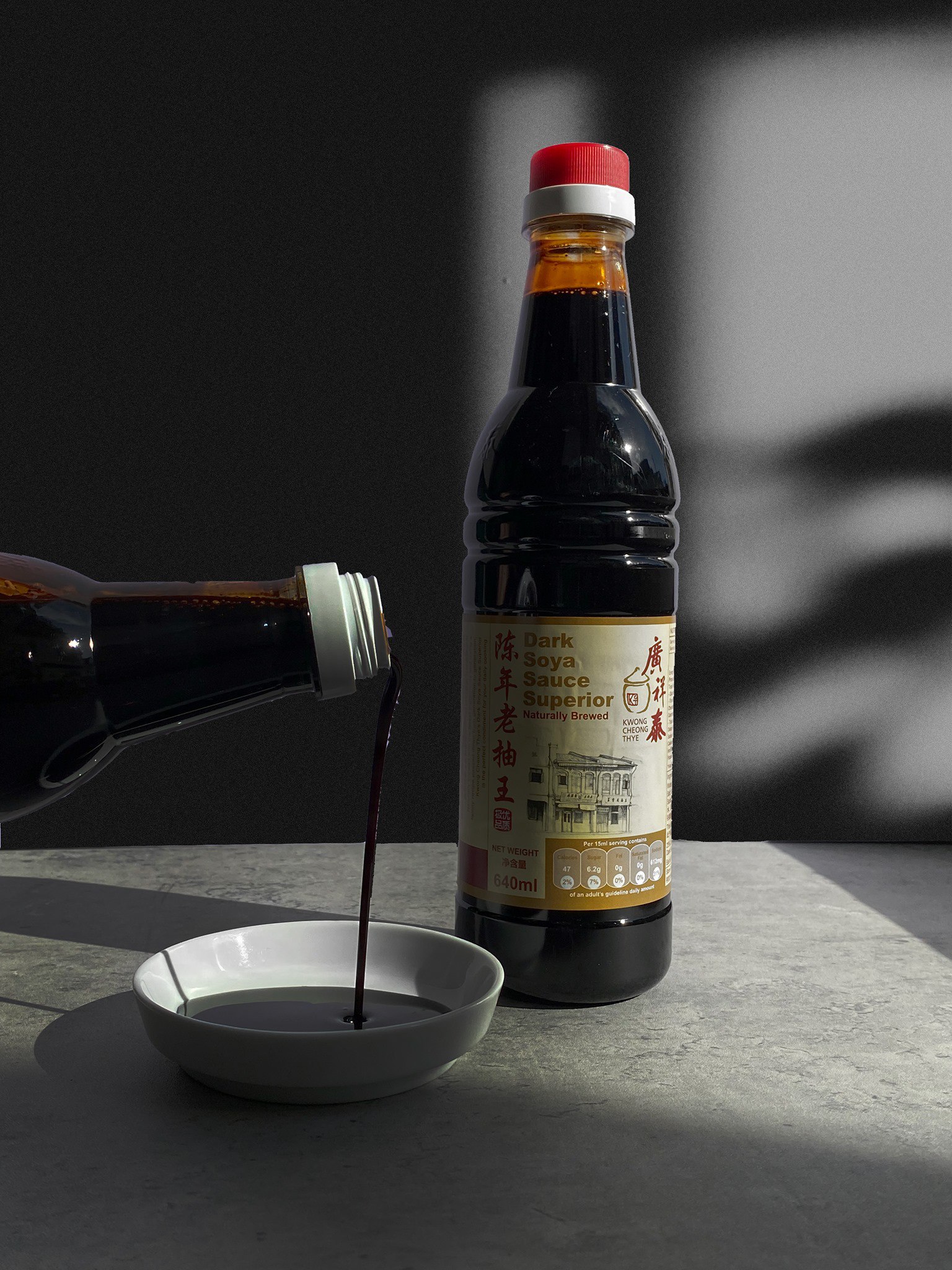
KCT is a heritage brand that continues as a family business and upholds values passed down through generations. What’s more, we continuously strive to innovate, keep pace with trends, and aim to be a professional brand by creating consistent products with high quality.
Soy sauce production is steeped in tradition, yet the industry is evolving rapidly. What are some of the biggest challenges or opportunities you’ve encountered in modernising a heritage process without losing its authenticity?
One of KCT’s key missions is to consistently ferment and brew soya sauce. We achieve this by studying fermentation, controlling every step of our soya sauce-making process.
We recognise the increasing global temperatures and ferment our soya sauce in a controlled environment with a controlled temperature range to maintain consistency. We have also invested in automated manufacturing for efficiency and consistency.
Two years ago, KCT was one of the first food manufacturers to conduct carbon accounting, which has enabled us to reduce our carbon emissions by 30% since then. By reducing emissions and setting sustainability goals, we gain a competitive advantage over our competitors.
The upcoming second production facility is a major milestone. What prompted this expansion, and how will its scale, especially with 39 fermentation tanks across two levels, transform KCT’s capabilities?
Supply and demand were the driving factors for KCT. The company operates in 30 markets, with export sales exceeding 50% of its business. The demand from our overseas market has rapidly grown, prompting us to establish a new factory to meet this demand. This new factory will increase our current soya sauce capacity by 600%.
Beyond increased production, how will the new facility enable innovation, whether in fermentation techniques, product lines, or quality control? Are there areas you’re particularly excited to explore?
The new facility will feature a full Manufacturing Execution System, providing data on the efficiency of every machinery component. This will complement our current quality control techniques. We are also investing in automated warehousing with AGV and automated rackings.
Kwong Cheong Thye is deeply rooted in Singapore, yet its products reach international markets. How do you see the new facility supporting your growth strategy, both at home and abroad?
In Singapore, we are committed to increasing consumer awareness and focusing more on B2C. With the increased output of soya sauce, we can expand our export sales in current markets and enter new ones.
For this year and beyond, what ambitions do you have for the brand as it enters this new phase? How do you hope to set new benchmarks for what a century-old Singapore brand can achieve?
We will continue to create products that are consistent and of high quality to meet the needs of the world’s top chefs. At the moment, KCT is used in all five-star hotels in Singapore, all Michelin-starred Chinese restaurants, as well as brand chains such as Paradise Group, Imperial Treasure, Crystal Jade, Putien, Din Tai Fung, and Jumbo.
We aim to share our restaurant-quality products with the general consumer market. We are also highly focused on our ESG goals and strive to be a truly sustainable food manufacturer.








 Back
Back