For all the talk of mechanical watches as symbols of slowness, they have long harboured a curious flirtation with the digital. Not digital in the quartz sense, but digital in presentation: Time reduced to numerals, framed within small windows, with hours that don’t sweep but rather, arrive.
This reverse anachronism dates back centuries. 17th-century clocks employed wandering and jumping hours to make time easier to read at a glance. By the late 19th century, Austrian engineer Josef Pallweber had refined the idea into something recognisably modern, patenting a system of rotating discs that displayed numerals through dial windows. Licensed to IWC in 1885, the mechanism found its way into roughly 20,000 pocket watches.
The jumping hour transitioned to wristwatches in the 1920s, finding a natural ally in Art Deco where clean lines and graphic sensibility suited the guichet (French for “window”) dial layout perfectly. Popularity faded around World War II, only to resurface in the 1970s as electronic digital watches and space-age aesthetics reshaped the cultural imagination. Today, as collectors tire of overexposed everything and perpetual hype cycles, the jumping hour is enjoying another quiet resurgence, buoyed perhaps by nostalgia, minimalism, or a cheeky hunger for the contrarian.
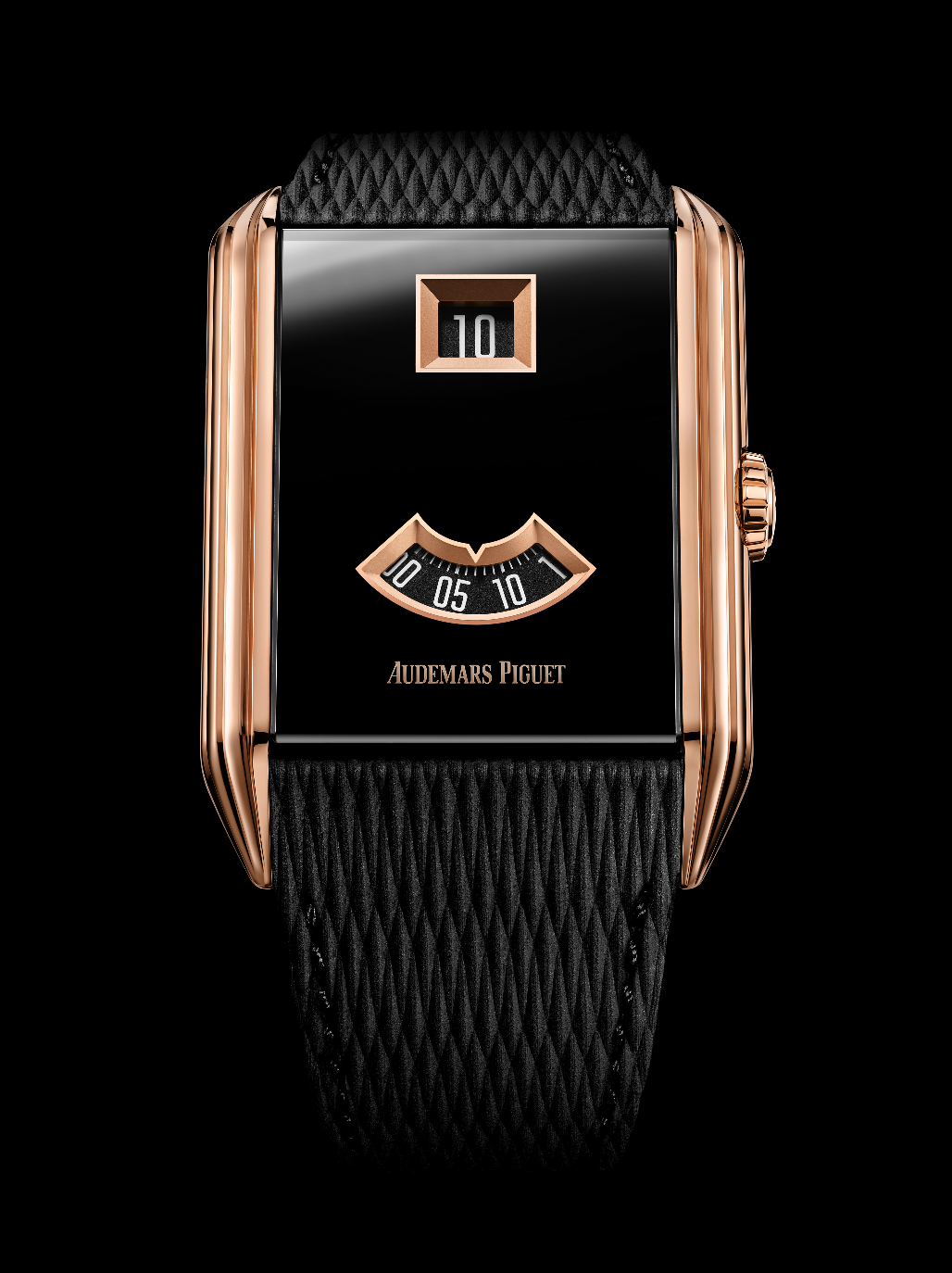
Few expected Audemars Piguet to enter the jumping-hour conversation this year, but that’s exactly what makes the Neo Frame Jumping Hour so captivating. For a manufacture rarely accused of straying far from its octagonal or circular orbit, this pivot into archival territory is bold and refreshing, but also natural.
Audemars Piguet was, after all, an early proponent of digital displays, producing 347 jumping-hour watches between 1924 and 1951. Many were rectangular or square in keeping with the period, though the maison also toyed with cushion-shaped cases, removable or concealed lugs, engraved surfaces, and even triple-aperture layouts. The Neo Frame draws direct inspiration from a 1929 reference known as the “Pre-Model 1271”, a design steeped in the Streamline Moderne movement of late Art Deco, featuring eight vertical gadroons tapering into pointed lugs.
Its contemporary successor retains these vertical flanks and re-renders them in 18K rose gold. The most dramatic evolution, however, lies in the crystal. Where the vintage watch relied on a metal case to protect the fragile watch glass beneath it, the Neo Frame places the sapphire crystal front and centre, extending it from end to end for a frameless, architectural effect.
But such a construction meant achieving even 20m of water resistance required some technical tinkering. The dial plate had to be bonded directly to the sapphire crystal and then secured into the case – a technique developed specifically for this watch.
(Related: Audemars Piguet pushes chronograph innovation further with the Royal Oak RD#5)
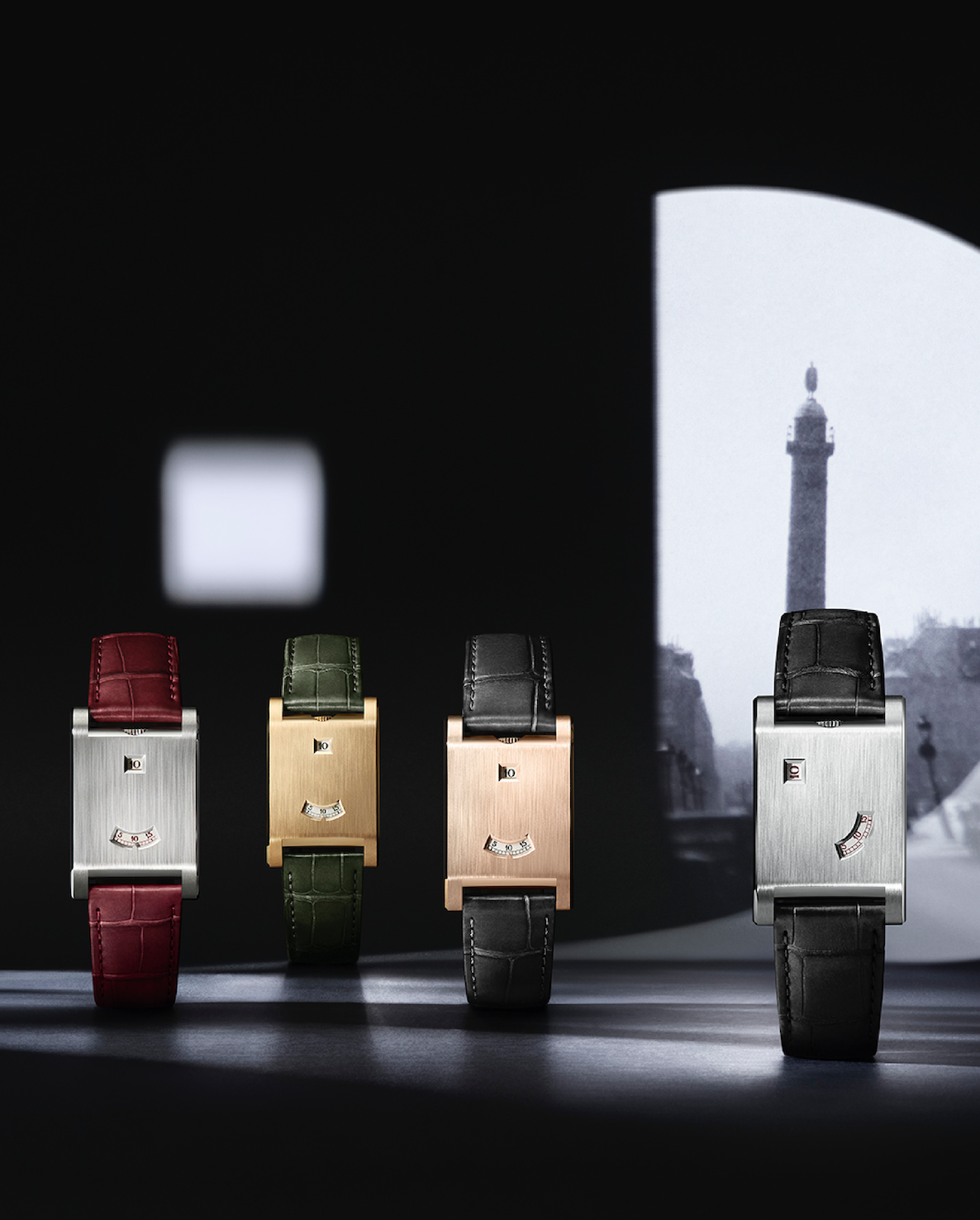
Cartier, too, dabbled with jumping hours in the early days, embedding it into one of its most recognisable forms — the Tank. And thus, the Tank a Guichets debuted in 1928. Though it shares a similar dual-aperture layout with Audemars Piguet’s 1929 reference, Cartier’s interpretation leaned much more austere. Its solid, armour-like chassis offers no distraction, just two precise windows cut into a smooth expanse of precious metal, no doubt a firm nod to the military vehicle that inspired the Tank line in the first place.
The maison has revived the model periodically – in 1997, 2005, and again in 2025 – yet last year’s releases adhere most closely to the 1928 blueprint. The crown sits at 12 o’clock, preserving the purity of the case profile, while the integrated brancards and lugs maintain the watch’s architectural coherence. Standard editions in yellow gold, rose gold and platinum retain the traditional vertical alignment of the apertures, but a 200-piece platinum limited edition disrupts the symmetry, rotating the display 90 degrees so the hour sits at 10 o’clock and the minutes at four.
(Related: Celebrating the season's best jewellery watches)
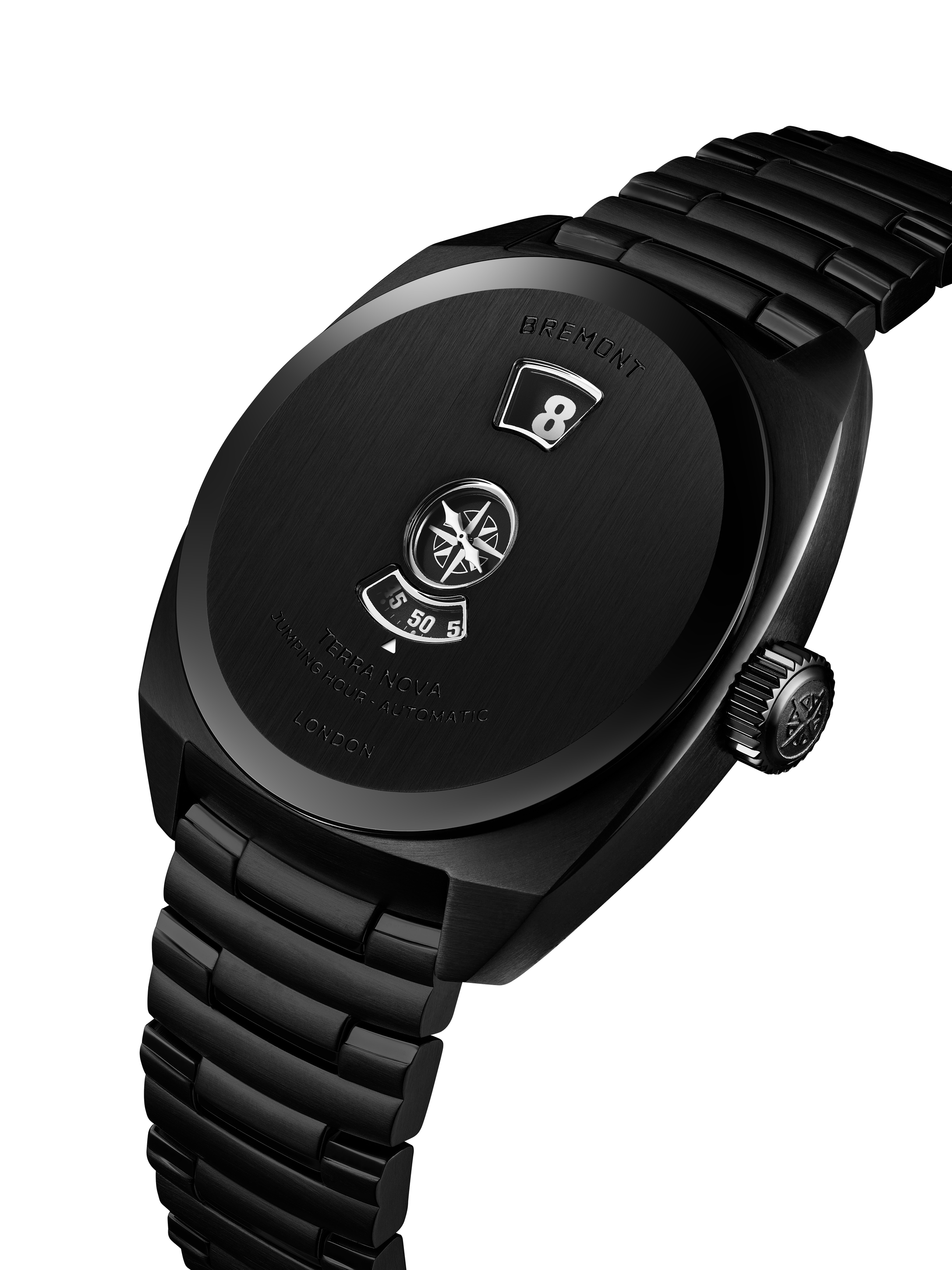
Military influence also appears at Bremont, though here the guichet is filtered through early 20th-century pocket and trench watch design. The Terra Nova Jumping Hour adopts a cushion-shaped case and adds a small central seconds hand that sweeps across the Wayfinder insignia in the dial centre. Earlier iterations in steel and bronze leaned into heritage tones but its latest reference, executed in steel with black DLC, gives it a darker, modern edge.
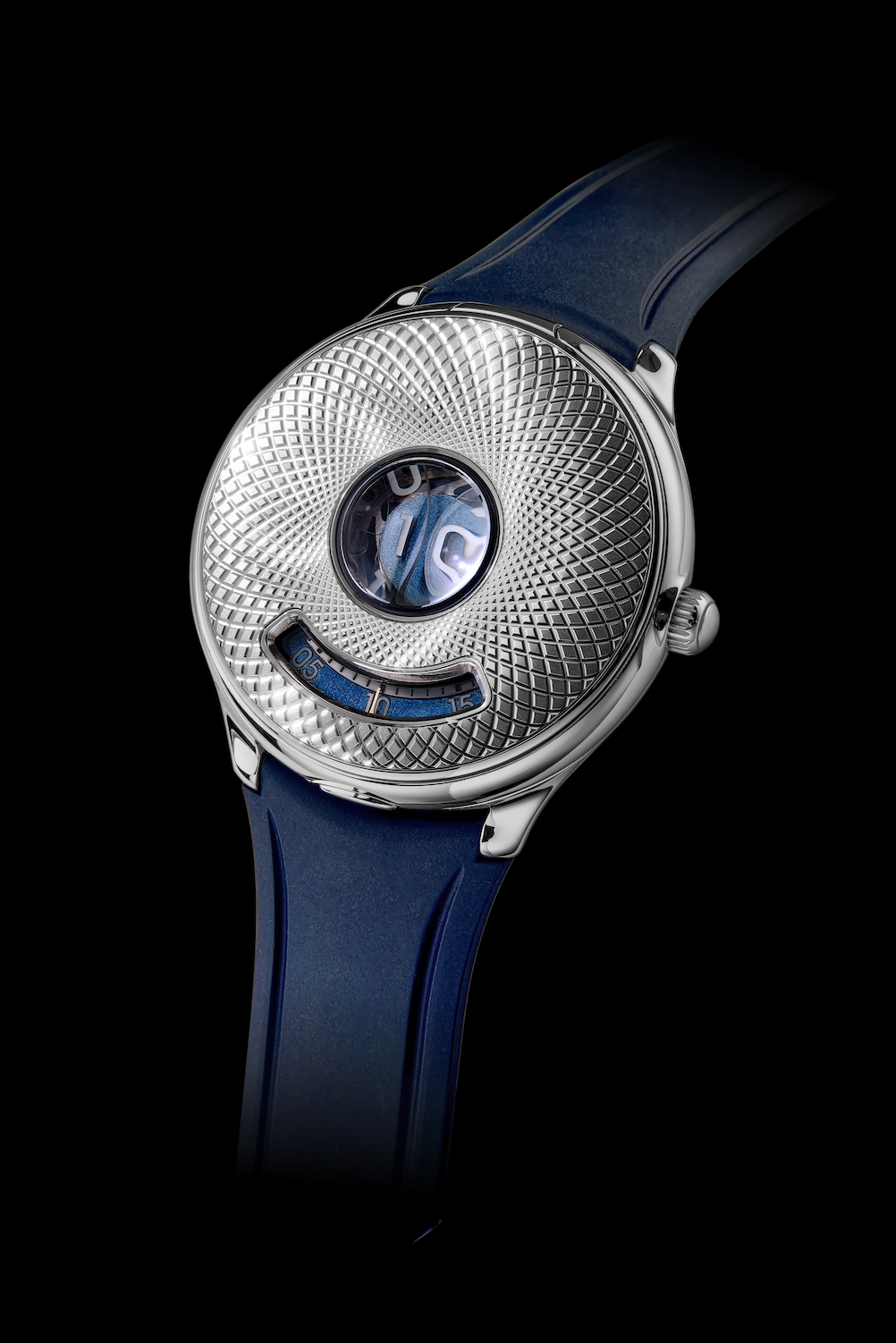
Meanwhile, other brands have used all that extra metal as a canvas for creative expression. The Czapek & Cie Time Jumper pairs a rounded, retro-futurist case with a hinged cover engraved in a proprietary “Singularite” guilloche pattern. A central loupe magnifies the 24-hour jumping display, while beneath the cover an open-worked movement showcases the mechanism in full.
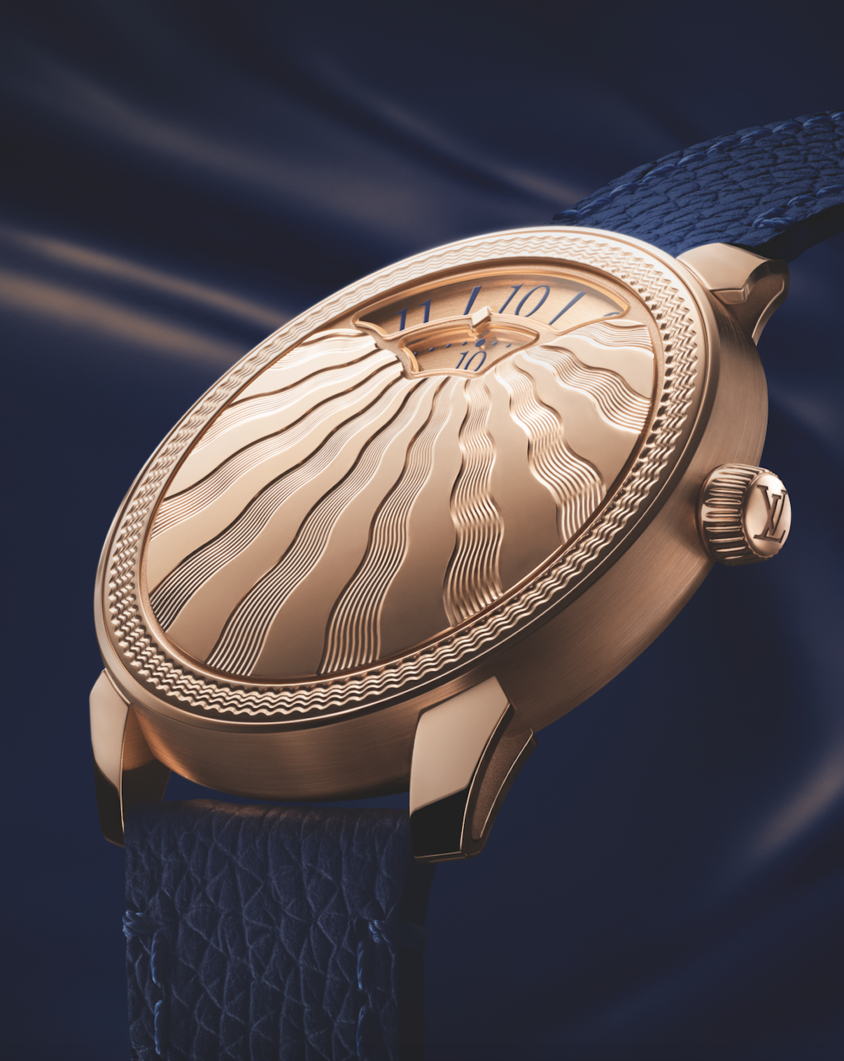
The latest Louis Vuitton Convergence, unveiled at LVMH Watch Week earlier this year, also makes guilloche the main event. Its radiant motif uses an 1850 rose engine and a 1935 straight-line engine, with a specially developed cam adding depth to each ray. Six months of development and two days of engraving per watch attest to the difficulty of executing such decoration on a curved surface.
Of course, not all digital displays rely on an instantaneous jump. The Tambour Convergence employs trailing (or dragging) hours, in which the hour disc advances gradually, not unlike the continuous motion of a conventional hand.
(Related: Luxury watch boutiques in Singapore)
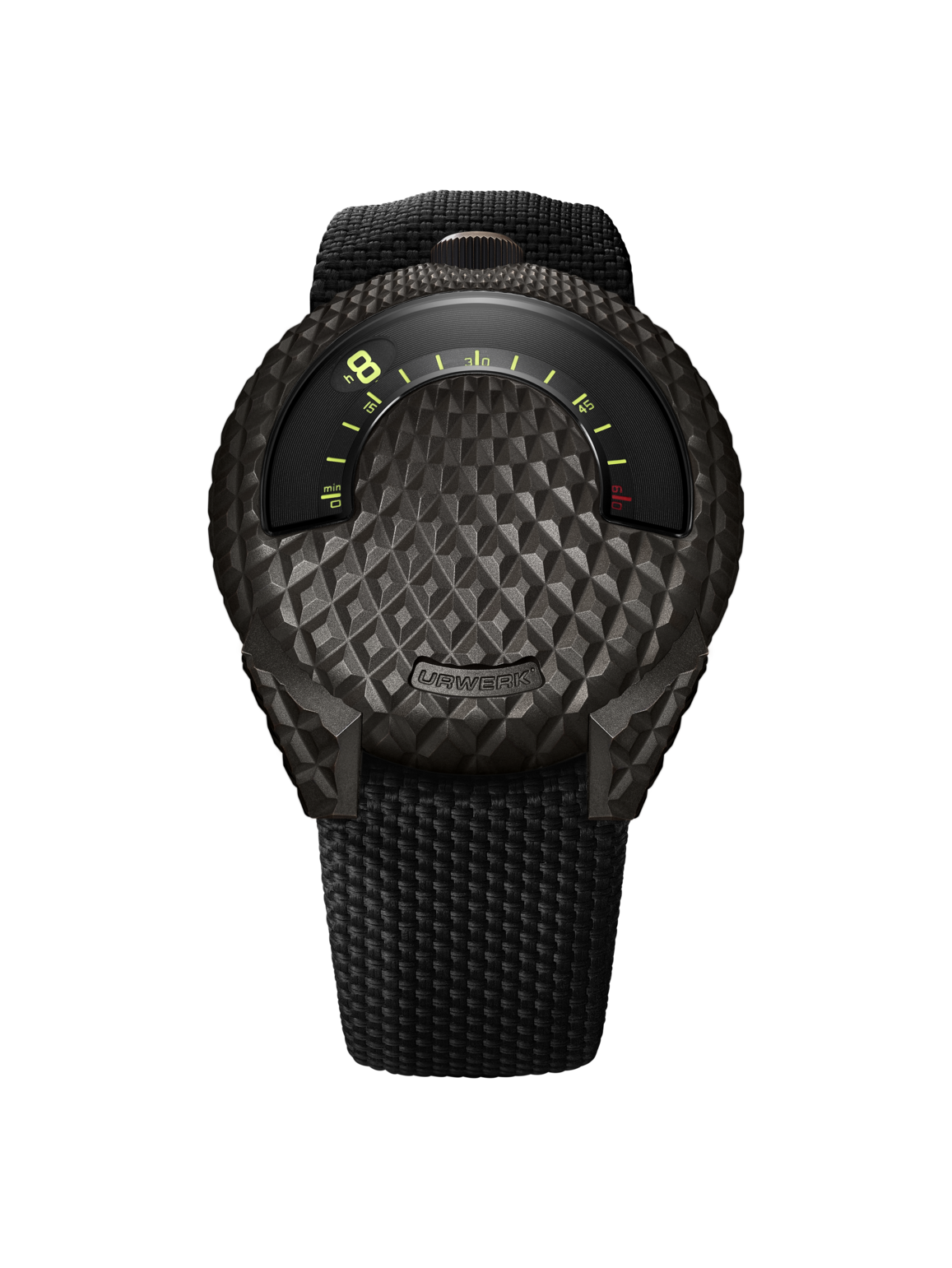
Then there are wandering hours: A complication now inseparable from Urwerk. Here, rotating satellites carry hour numerals along a minute track, with the active satellite acting as both hour marker and minute hand as it sweeps across a 180-degree arc. The limited-edition UR-101 T-Rex encases this choreography in hand-patinated bronze, earning its name from the scale-like guilloche.
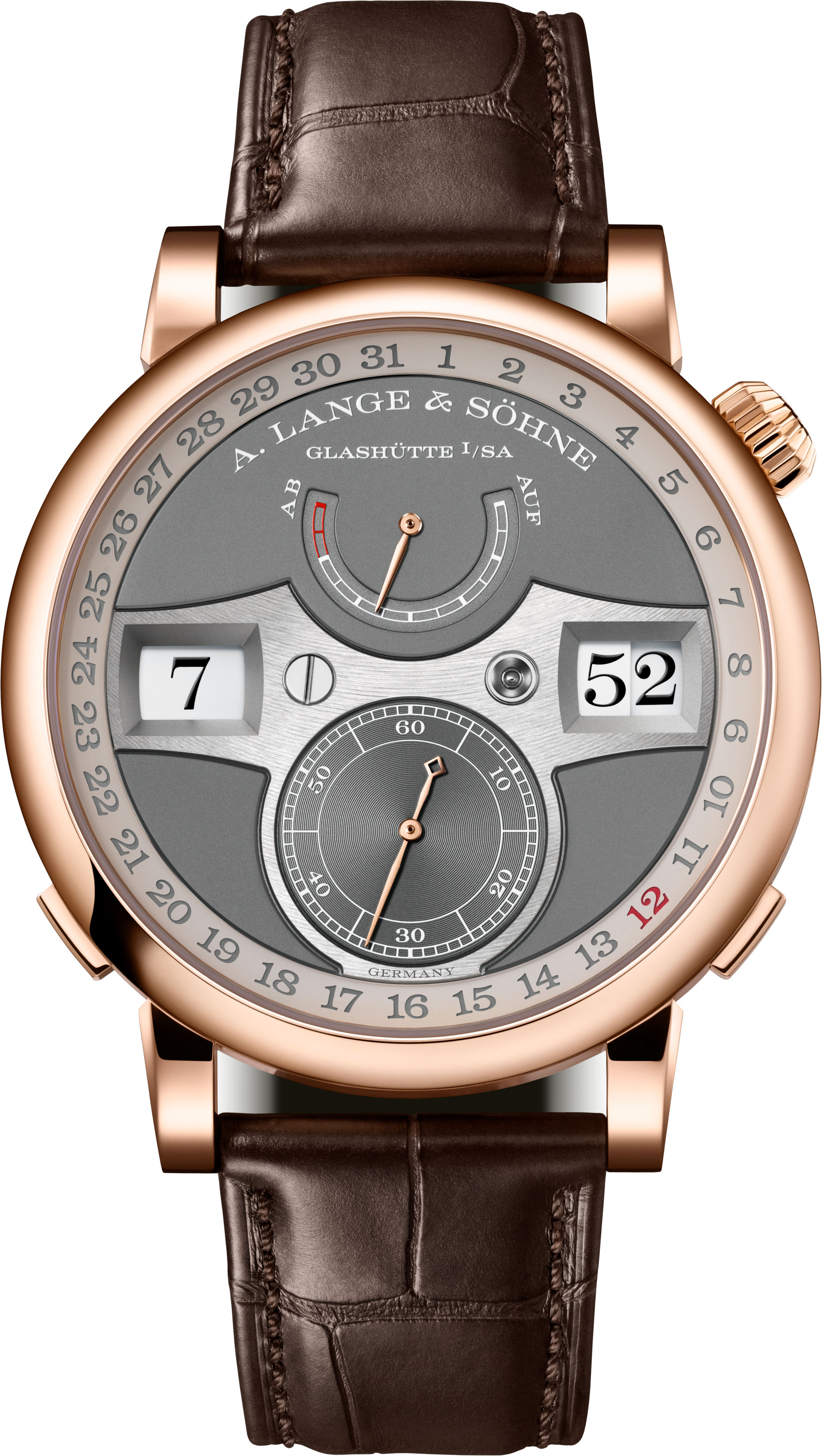
While most maisons treat such displays as occasional diversions, A. Lange & Sohne built an entire modern icon around them. The Zeitwerk, introduced in 2009, is widely regarded as the first mechanical wristwatch to present a “true” digital display: large, horizontally aligned jumping numerals for both hours and minutes, switching instantaneously in crisp unison. Its inspiration lies not in pocket watches, but in the 19th-century five-minute clock at the Dresden Semper Opera House.
Engineering such clarity is no easy task. Advancing substantial numeral discs simultaneously, on the hour, every hour, demands immense and precisely controlled energy. The maison addresses this with a patented constant-force escapement that accumulates power and releases it in measured bursts, ensuring consistent amplitude. A fly governor then absorbs excess energy during the jump, preventing shock from reverberating through the movement.
Far from mimicking electronics, mechanical digital displays reclaim the numeral itself as an object of design. They reduce time to its essentials – numbers and not much else – while quietly demonstrating formidable technical prowess. They remind us that in watchmaking, innovation can be as much about what you take away as what you add.








 Back
Back