Luxury, for most travellers, still begins with the visual. The sweeping lobby, the infinity pool suspended above the horizon, the carefully composed arrival shot. But for Christopher Chua, Founder and Creative Director of KulörGroup, design only begins to reveal its true value once the image fades.
“What is often missing is how luxury actually works once the photograph is taken,” he reflects. “It’s how a space supports daily use, movement, and comfort over time. Whether it feels intuitive. Whether it allows moments of pause.”
This belief sits at the heart of KulörGroup, the Singapore-based hospitality design studio Chua founded to approach hotels and resorts not as static destinations, but as living ecosystems. Across projects spanning the Maldives, Bali, Latin America, and beyond, his work is guided by a discipline that prioritises experience, context, and long-term relevance over immediate visual impact.
Rather than designing individual buildings as standalone statements, Chua begins by considering how every element relates to one another. Landscape, climate, circulation, service flow, and daily rituals all shape the architecture from the earliest stages. “When you think in ecosystems, the scale of attention changes,” he explains. “You stop focusing on objects and start thinking about relationships.”
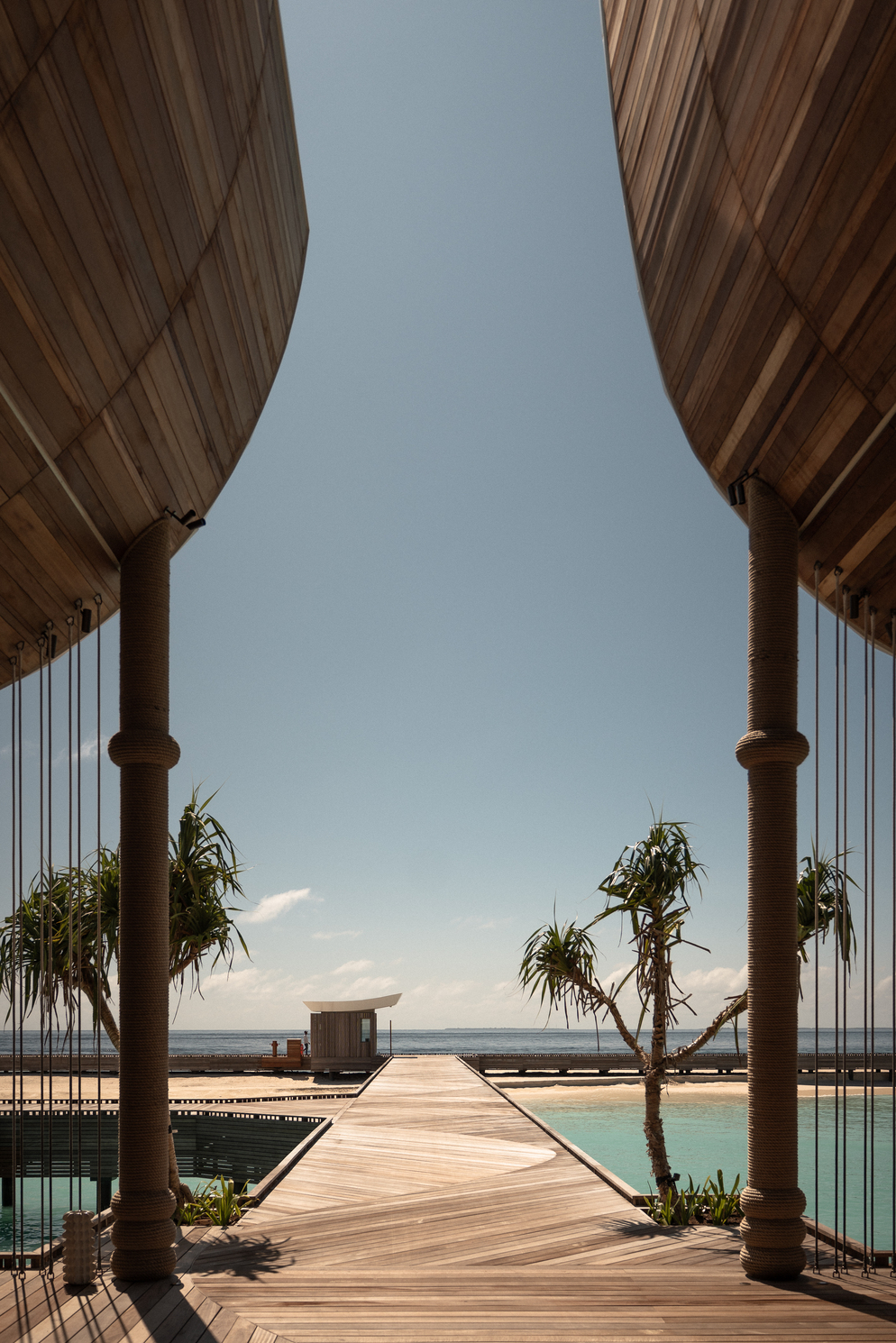
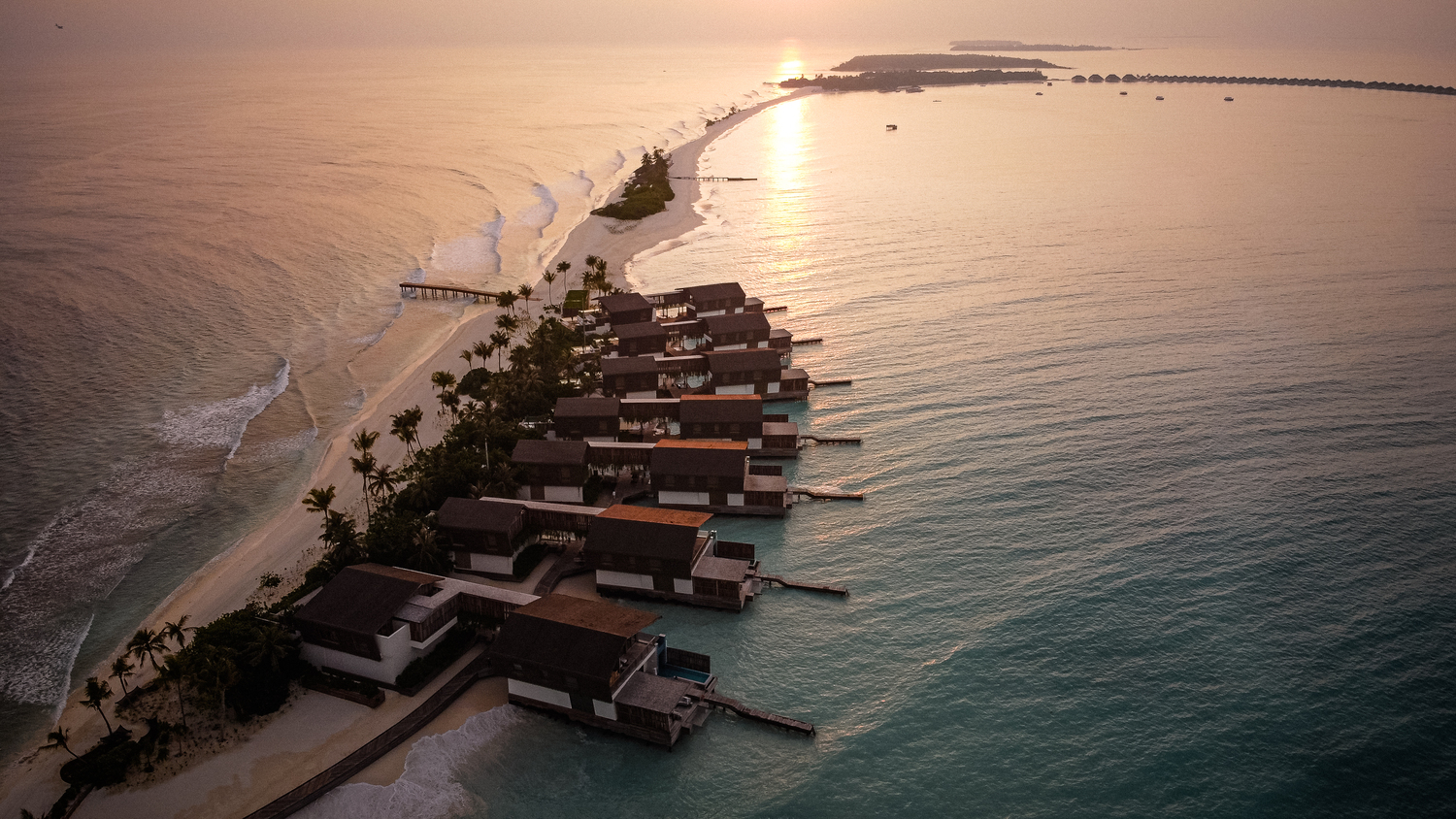
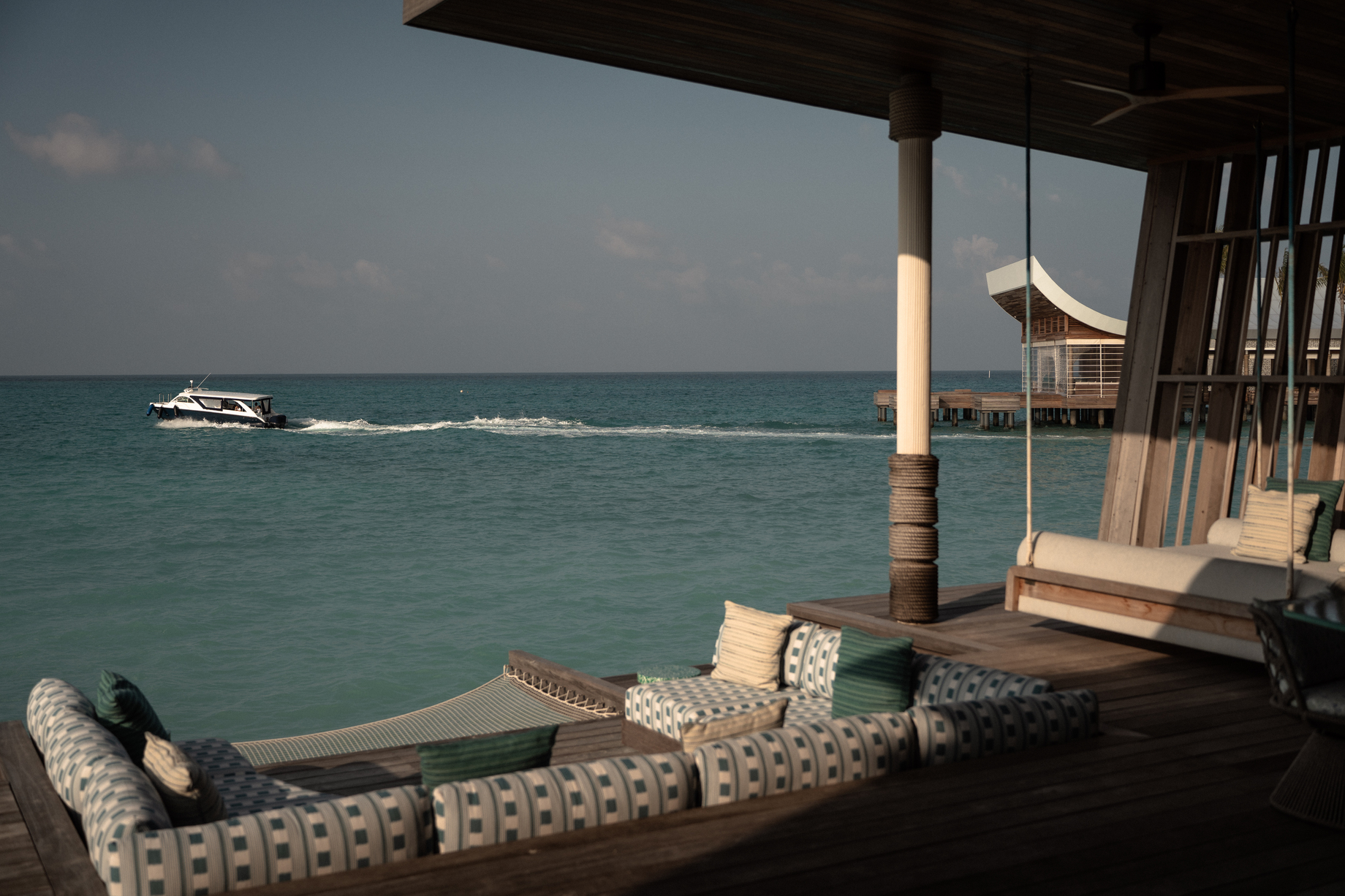
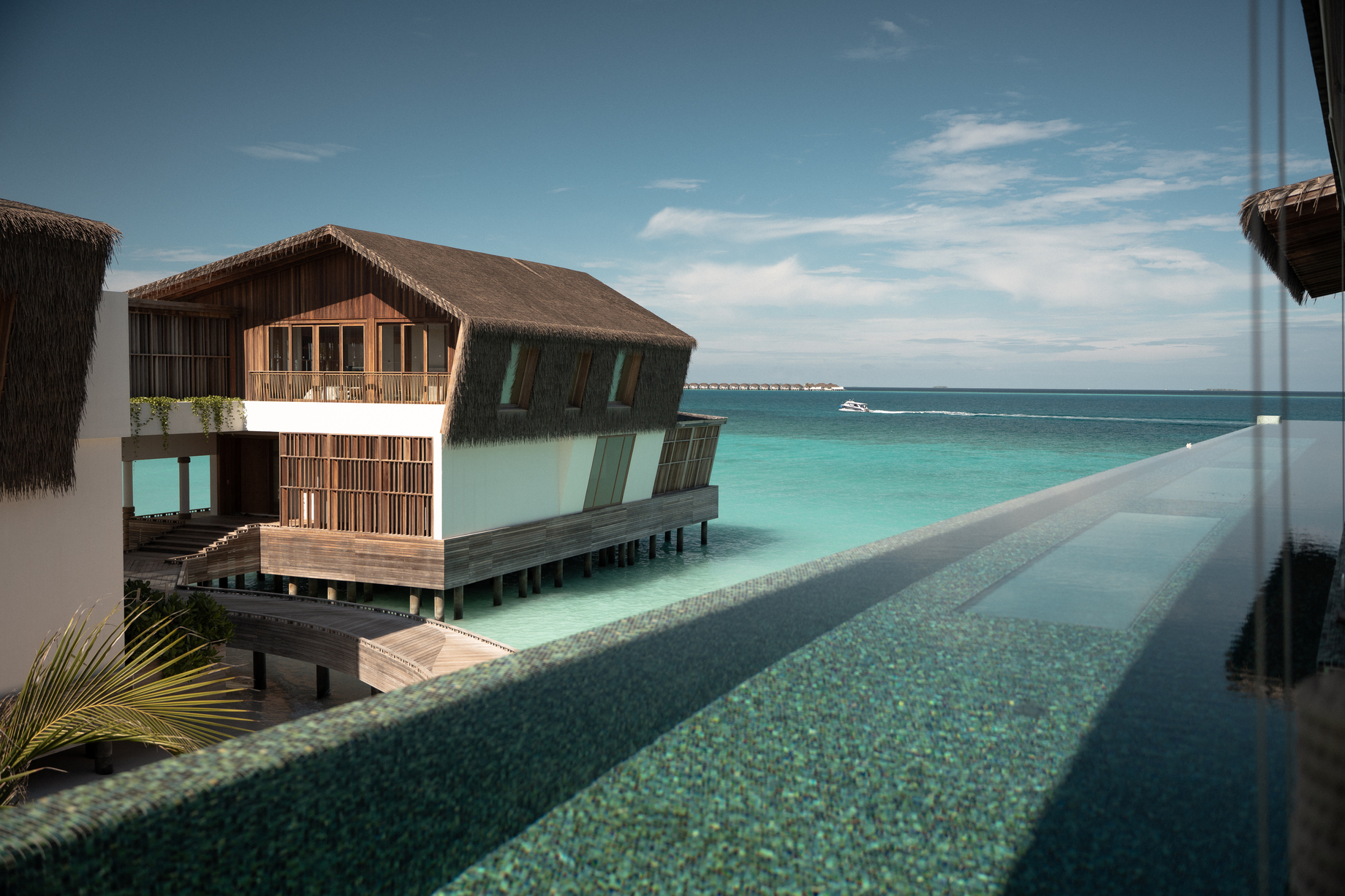
His latest project, .Here Maldives, embodies this philosophy with clarity. Conceived as a duality-driven retreat, the resort unfolds as a continuous spatial journey between water, land, and sky. Guests move from lagoon-level immersion to elevated bedrooms, then along a suspended pool that behaves less like a feature and more like an inhabitable space. From different vantage points, the environment constantly reframes itself, shifting between jungle, horizon, movement, and stillness.
These transitions are not decorative gestures, but deliberate tools to create orientation, calm, and memory. Rather than narrating a story through overt design statements, the architecture listens to its surroundings, allowing experience to lead.
“When architecture responds directly to its environment, the sense of place feels natural rather than constructed,” Chua says.
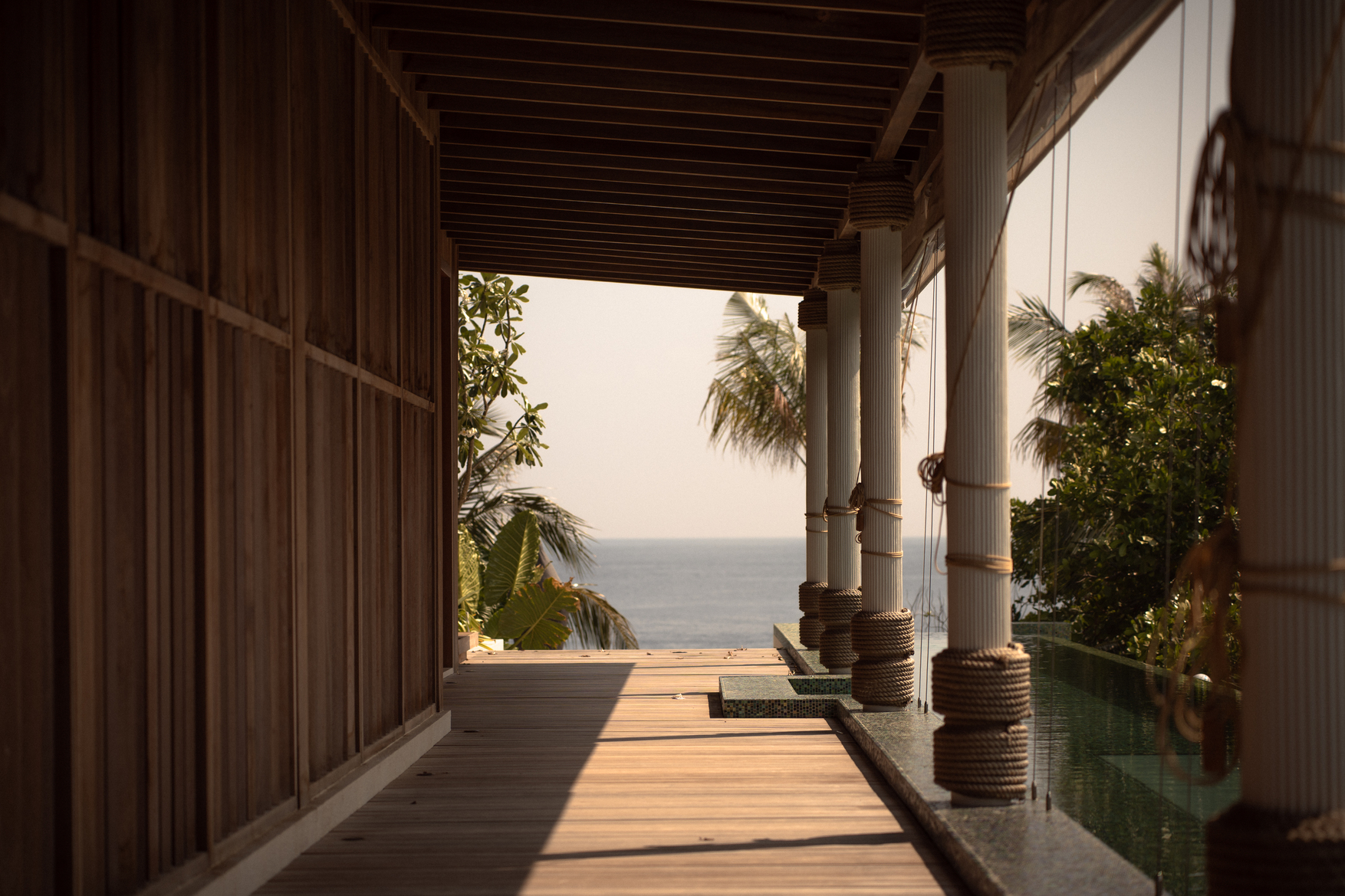
It is this sensitivity to human movement and emotion that defines much of his work. While emotionally intelligent design has become an emerging conversation within hospitality, for Chua it begins long before material palettes or form. He visualises spaces through the body first, walking through them mentally, understanding where one slows down, where one opens up, and where quiet is needed.
Scale and proportion are shaped by feeling rather than image. The in-between moments, thresholds, framed views, and transitions between light and shade, emerge organically when spatial logic is resolved from the start.
During the final stages of .Here Maldives, Chua found himself instinctively photographing these moments, not as documentation, but as recognition that the emotional experiences he had imagined had materialised in reality. It is in this alignment between intention and lived experience where design becomes truly resonant.
(Related: Re-wilding with architecture)
Sustainability, too, is deeply woven into his design process, not treated as a technical checklist added on later. Working in environmentally fragile regions like the Maldives, the Galapagos, and Fiji has reinforced the importance of integrating ecological responsibility from the earliest conceptual moves.
Orientation, footprint, massing, construction logic, and material choice are all shaped with long-term impact in mind. The result is architecture that feels quieter and more deliberate, accountable to its setting rather than imposed upon it.
“When sustainability is embedded from the beginning, it becomes part of design quality itself,” he notes. “The buildings feel more appropriate, and they age better.”
This philosophy has guided Chua’s collaborations with hospitality groups such as Pulse Resorts, Six Senses, Conrad, Ascott, IHG, and LUX*, as well as long-standing partnerships across Bali and the Maldives. Regardless of scale or brand, no design is ever repeated. Each project is approached as a dialogue between context and craft, sustainability, and style.
(Related: The new shape of sustainable living – Off the beaten track, onto a better path)
Underlying it all is a growing shift away from excess toward experiential balance. In an industry often driven by accumulation, more features, more spaces, more visual statements, Chua favours clarity and restraint.
“A lot of projects try to impress by doing more,” he reflects. “We spend time deciding what genuinely matters, then design around that with discipline.”
At .Here Maldives, this meant limiting scale, questioning every space, and allowing moments of calm between experiences. Guests are not pushed into a fixed narrative, but are given the freedom to retreat, engage socially, or simply be still. Editing, he believes, is harder than adding, but it is what allows spaces to feel resolved rather than overdesigned.
Looking ahead, Chua sees hospitality design entering a more reflective phase. Visual novelty, once a driving force, is giving way to responsibility, relevance, and deeper connection to place. Well-being, he believes, is not created through amenities alone, but through how spaces are paced, scaled, and integrated with their surroundings.
Designers will increasingly be called to work with care rather than extraction, allowing climate, culture, and context to lead. Guests, more perceptive than often assumed, can sense when a place is thoughtfully resolved and when it is simply styled for attention.
“Spaces with depth, restraint, and genuine connection to their setting will always endure longer,” Chua says.
In an era where luxury travel continues to evolve, Chua’s work offers a more considered vision of hospitality, one rooted not in spectacle, but in experience, emotion, and lasting relevance.





 Back
Back