There are trips that linger in the mind because of a single, defining moment, and then there are journeys that stay with you because of their cumulative effect – a slow layering of landscapes, rituals, and encounters. This Aman odyssey through Indonesia was in the latter category, unfolding over a week across four properties, each chosen for its relationship with place and its own interpretation of understated luxury.
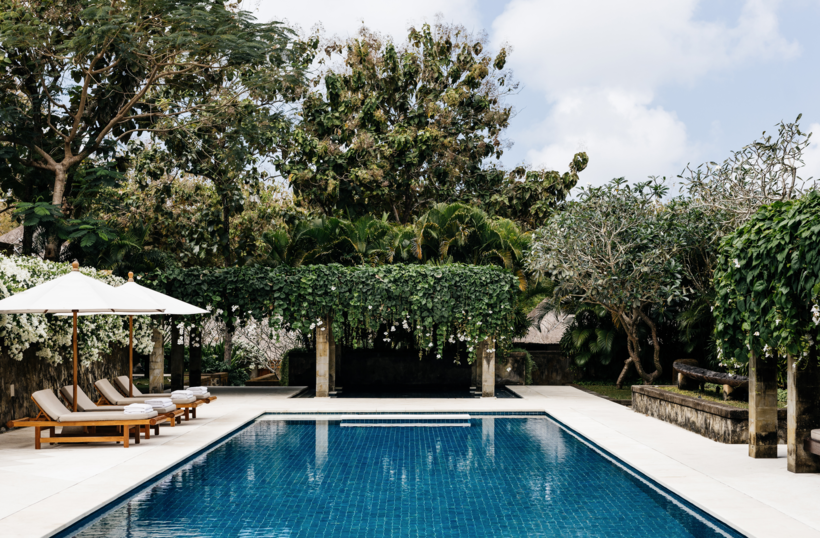

The journey began quietly, as many Aman stays do, at Aman Villas Nusa Dua, a collection of expansive private residences set along Bali’s southern coast. Unlike a conventional resort, the villas are designed as self-contained sanctuaries, each with its own entrance, landscaped garden, and private pool that establishes a sense of scale and seclusion.
After the frenetic energy of Bali’s airport, the transition into the villa felt almost ceremonial. Gates opened onto manicured gardens, the soundscape shifting from traffic to birdsong and water. The rhythm here was deliberately unhurried. It was less an introduction to Bali than a gentle decompression – a necessary pause before the adventure ahead.
(Related: Aman Nai Lert Bangkok is your secret sanctuary in a busy city)
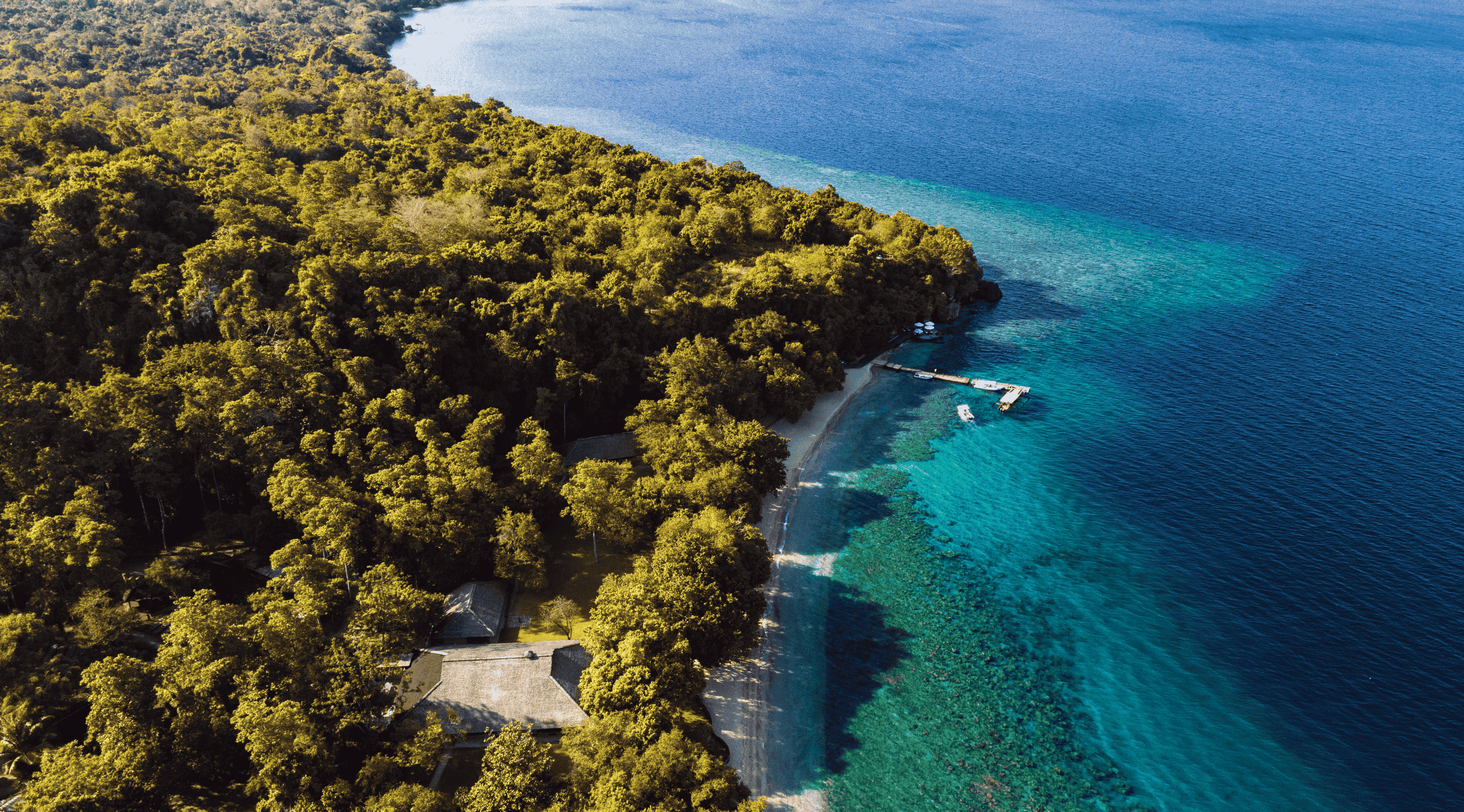
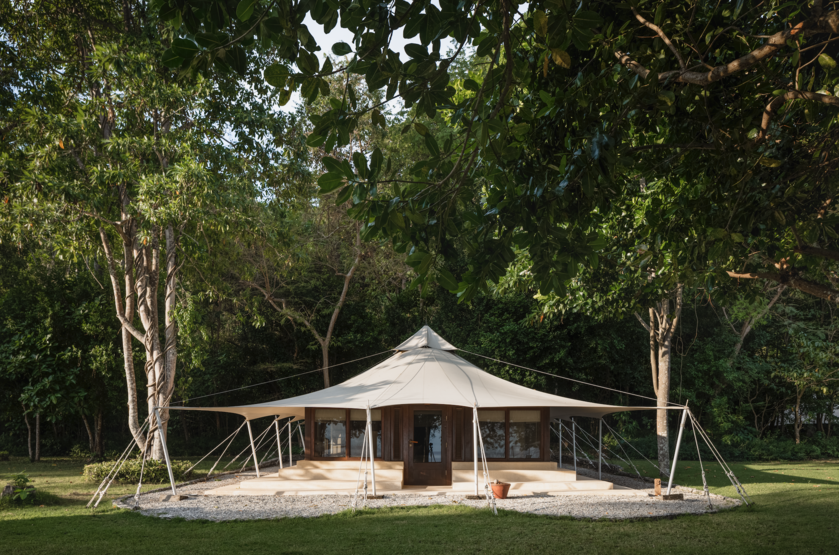
From Bali’s southern coast, the journey took us to Sumbawa and onward by boat to Moyo Island, where Amanwana occupies a rare position within a protected nature reserve at the edge of jungle and sea. Accessible by the property’s boat, the resort is deliberately remote, appealing to those drawn to nature-led travel rather than urban convenience. Arriving by water also sharpened the sense of remoteness. Tents, rather than villas, were tucked discreetly between trees, their canvas walls looking out onto the Flores Sea. Days here unfolded in soft contrasts: Early morning meditation accompanied by the sound of cicadas and the distant hush of waves, followed by long hours that invited idleness or exploration in equal measure. Kayaks skimmed over clear water, while shaded trails hinted at the wildlife that shares the island.
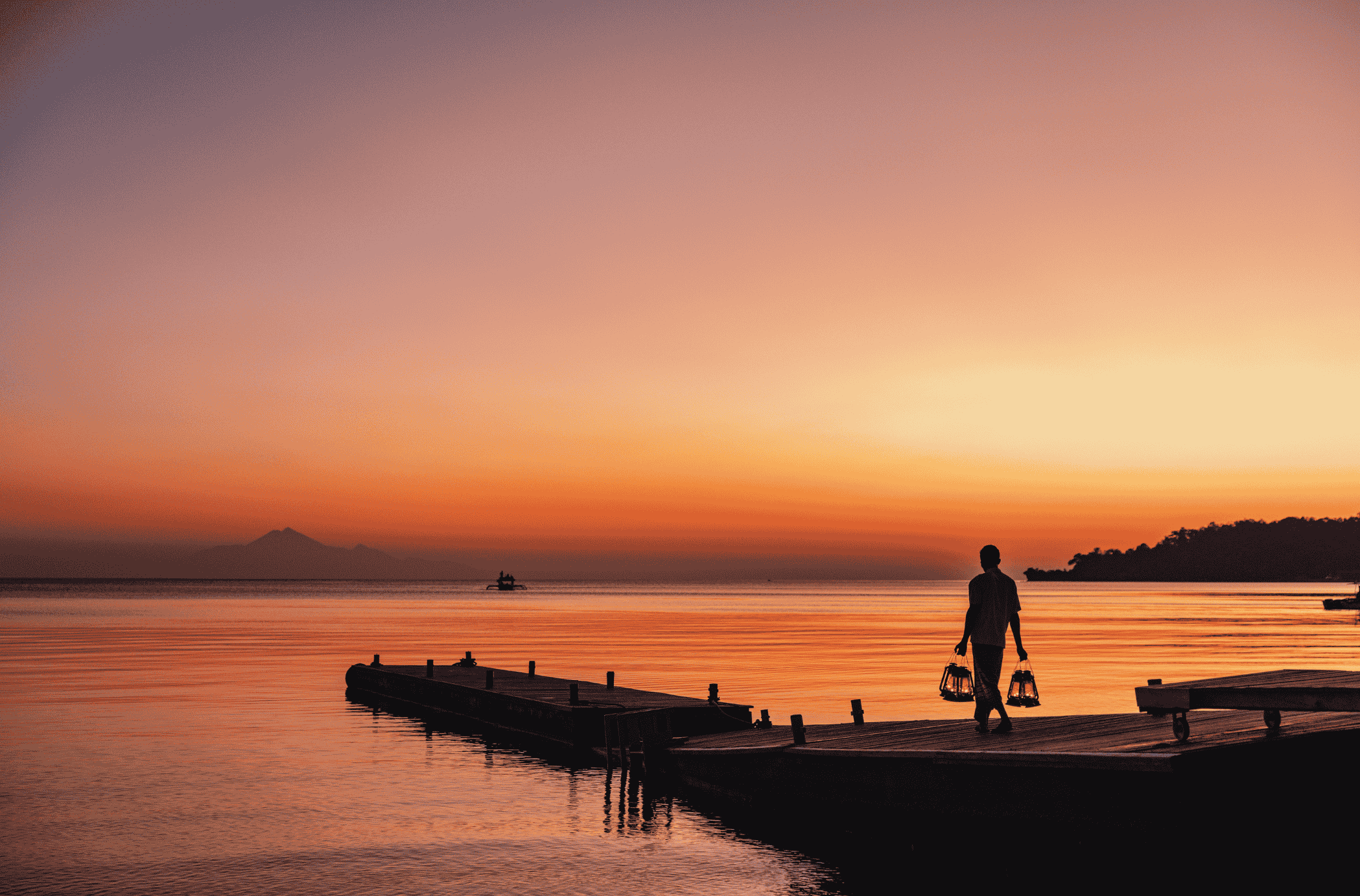
Meals at Amanwana were as much about place as flavour. One evening’s Bakela feast, served communally in the Sumbawanese tradition of sharing from a single platter, offered a window into local culture through food. Lanterns glowed low, dishes arrived in generous portions, and a Sakeco performance filled the night air with rhythm and chant.
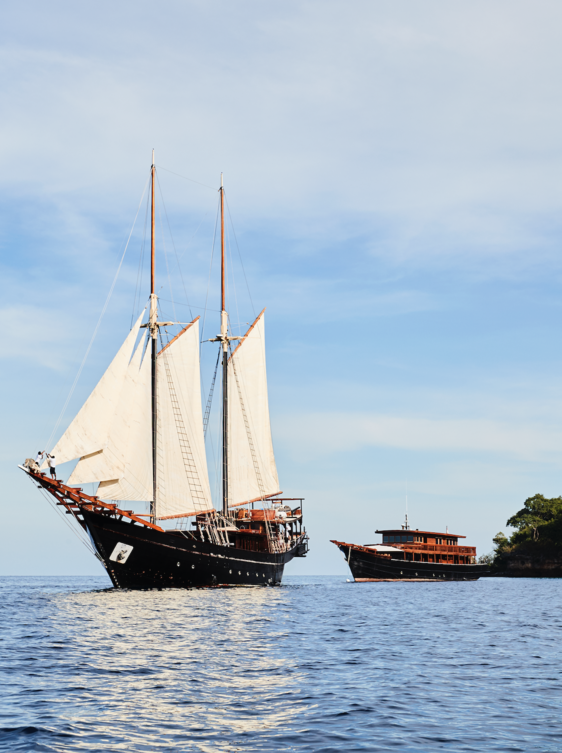
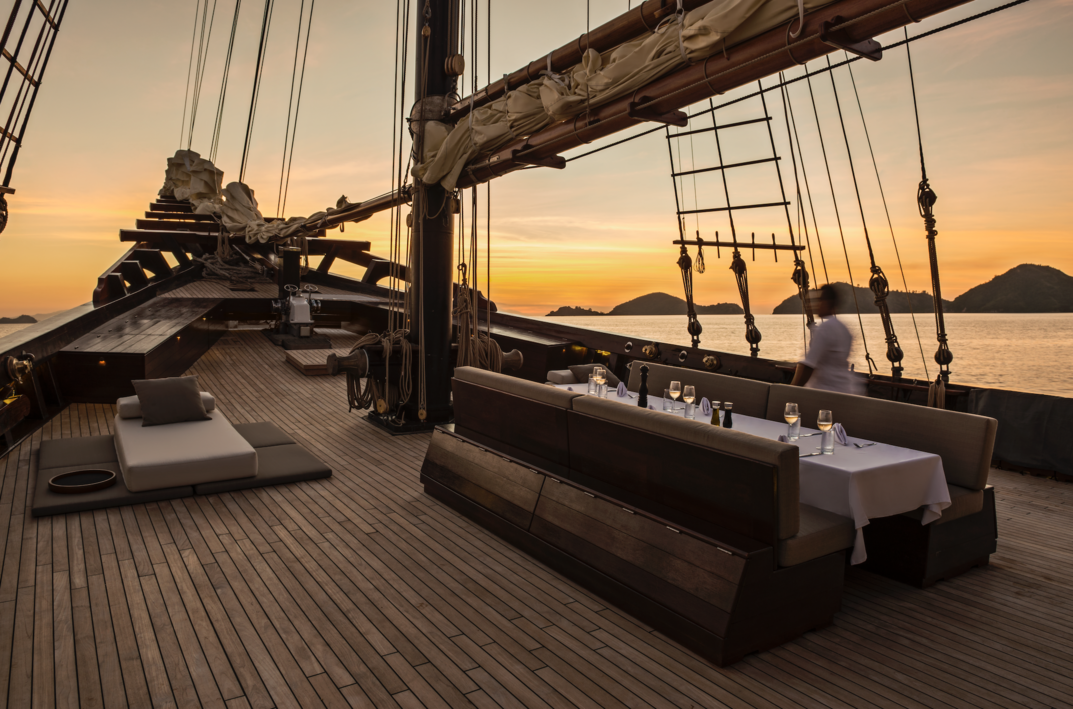
Midway through the journey, the horizon expanded once more as we boarded Amandira, Aman’s phinisi-style sailing vessel, which was coincidentally celebrating its 10th anniversary. Amandira is inspired by the traditional wooden ships that have plied Indonesian waters for centuries. And with just five cabins, generous communal decks, and attentive onboard service, the experience felt closer to a private charter than a cruise.
Polished teak decks and proud white sails gave the ship an almost timeless elegance, recalling Indonesia’s seafaring heritage while offering all the comforts of a floating retreat. As Amanwana receded into the distance, life slowed to the pace of the sea. Sunset cocktails on deck bled into an evening of quiet celebration, the ocean stretching endlessly in every direction.
The following morning brought a moment that would come to define the voyage. At dawn, Amandira drifted into Saleh Bay for an unforgettable whale shark encounter. The water was calm, the light still tentative, when large shadows started to appear beneath the surface. Seeing these gentle giants feeding and gliding through the sea was humbling; a reminder of how small one feels in the presence of nature at its most majestic. Time seemed suspended as we floated, watching their slow, deliberate movements before returning to the boat.
Back at Amanwana, the days that followed felt enriched by that encounter. A waterfall excursion through dense jungle revealed Matajitu Falls, its cool pools offering relief from the tropical heat. Floating on the water during a sound bath, eyes closed as vibrations rippled through the body, created an unexpected sense of weightlessness – not just physical, but mental.
Evenings were marked by simple pleasures: Sunset cocktails as the sky turned gold, a beach barbecue with the soft crackle of fire and the sea just steps away, and a stargazing cruise that ended beneath a canopy of constellations rarely visible from land.
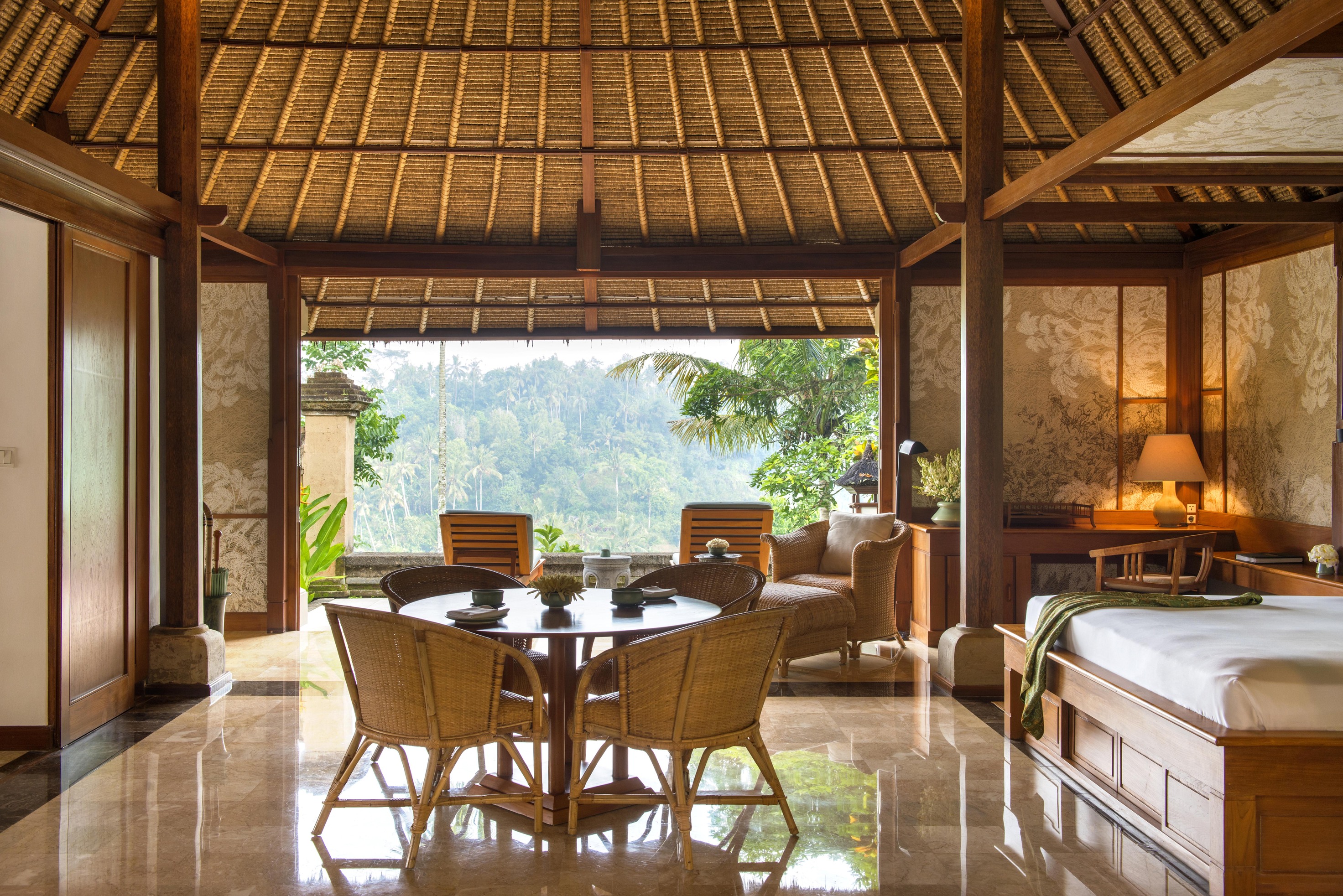
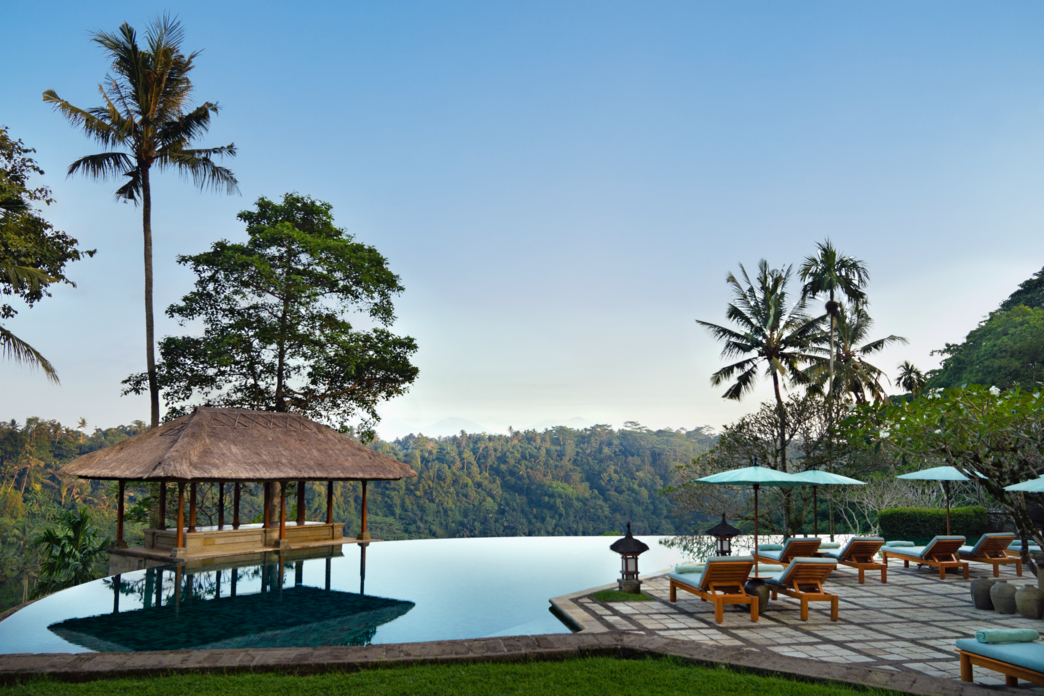
The final chapter of the journey saw us returning to Bali, this time to Amandari in Ubud, one of Aman’s most storied properties and a benchmark for resort design in the region. Perched above the Ayung Valley, Amandari draws architectural cues from a traditional Balinese village, with freestanding suites and alang-alang thatched roofs cascading down the hillside. Stone pathways led past lotus ponds, while daily life in nearby villages unfolded to the distant sound of temple bells. Here, the pace shifted once more, shaped by ritual and tradition.
An evening Ngejot feast captured this spirit beautifully. Rooted in a Balinese Hindu practice of sharing food with neighbours, the dinner was both celebratory and intimate, accompanied by a dance performance that was entertaining and educational, and at the same time, an important expression of communal identity. Mornings were equally evocative: Breakfast overlooking the valley and Amandari’s iconic pool, children learning traditional dance by the lotus pond, and the steady presence of the river far below.
(Related: Ubud Revisited)
Looking back, what made this journey memorable was not any single indulgence or headline experience, but the way each destination flowed into the next. From private villas to beachside tents, from open sea to river valley, the transitions were as thoughtfully curated as the stays themselves. Yet there was never a sense of being hurried along a prescribed path. Instead, the itinerary suggested possibilities, leaving space for rest, reflection and personal discovery.
This was not a trip designed to be replicated step for step. Rather, it offered a glimpse into what is possible when travel is approached as a narrative rather than a checklist; when movement becomes a means of understanding place, culture and self. In traversing Indonesia through Aman’s lens, the journey revealed the power of slowness, as well as the enduring appeal of travelling to both see and feel.
For more information, click here





 Back
Back